

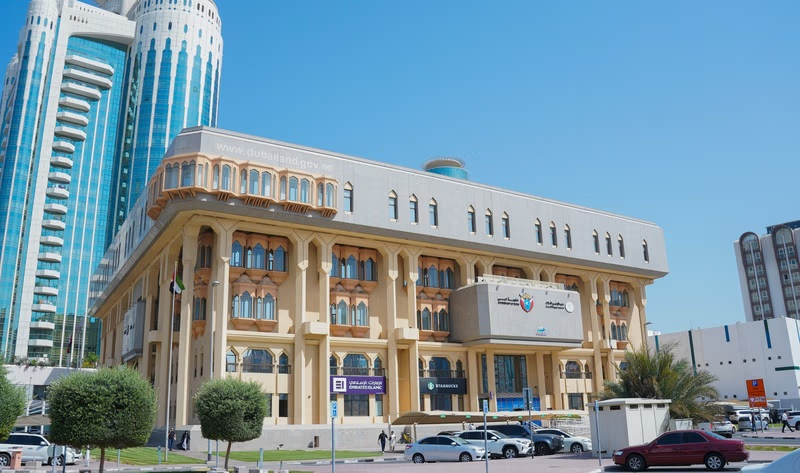
Dubai has taken its tokenised real estate initiative a step further by introducing regulated resale activity for previously issued digital property tokens, moving the programme beyond initial issuance into live secondary market testing.
The development, confirmed by the Dubai Land Department in partnership with digital asset infrastructure firm Ctrl Alt, marks the beginning of Phase Two of the emirate’s Real Estate Tokenisation Project Pilot.
In the first phase, ten properties with a combined valuation exceeding $5 million were fractionalised, resulting in the issuance of roughly 7.8 million blockchain based ownership tokens. Those tokens can now be resold within an approved marketplace operating under regulatory supervision.
Transition From Concept To Market Function
While the earlier stage focused on digitising property ownership into blockchain compatible units, the current phase tests whether such assets can function within a structured resale environment. Authorities are examining how liquidity develops, how pricing behaves, and how investor participation evolves under controlled conditions.
Transactions will take place exclusively through authorised distribution channels and remain synchronised with official land registry systems. This structure is designed to ensure that digital transfers correspond directly with legally recognised ownership records.
The infrastructure continues to operate on blockchain rails, with transactions recorded on the XRP Ledger and supported by regulated custody arrangements.
Distribution Platforms Enter The Pilot
Among the platforms participating in the rollout is PRYPCO. The company’s PRYPCO Mint marketplace is scheduled to go live on February 20, coinciding with the start of Phase Two resale activity under the supervised framework.
The integration of resale functionality is intended to evaluate whether fractionalised real estate can generate meaningful trading volumes without detaching from traditional property governance structures.
Investor Perspective
Reacting to the announcement, Tom Jewell, UK and UAE Property Investment Expert and Founder of SourceInvest, said on X:
“Dubai allowing resale + secondary trading of tokenised property is interesting. But let’s not pretend it changes everything overnight for property investment.
On the plus side:
– Lower entry points
– Potentially better liquidity
– More flexibility vs being stuck owning 1 whole unit
– Dubai doubling down on being a forward-thinking market
On the flip side:
– It’s still early stage
– Liquidity won’t magically appear day one
– Most serious investors still care about fundamentals (location, demand, rental performance)
– Tech doesn’t remove market cycles.”
Broader Strategy
Dubai’s property tokenisation programme forms part of a wider effort to embed regulated digital infrastructure into established asset classes. Rather than creating a parallel crypto based property market, authorities are attempting to align blockchain systems directly with land department records and oversight mechanisms.
At this stage, the pilot remains limited in scale. The shift to secondary trading is less about volume and more about operational validation, including settlement efficiency, compliance safeguards, and investor behaviour.
Whether tokenised real estate develops into a scalable investment channel will depend on sustained liquidity, pricing transparency, and regulatory continuity. For now, the emirate’s latest move represents a structured test of how blockchain based ownership can function within a conventional real estate ecosystem.