
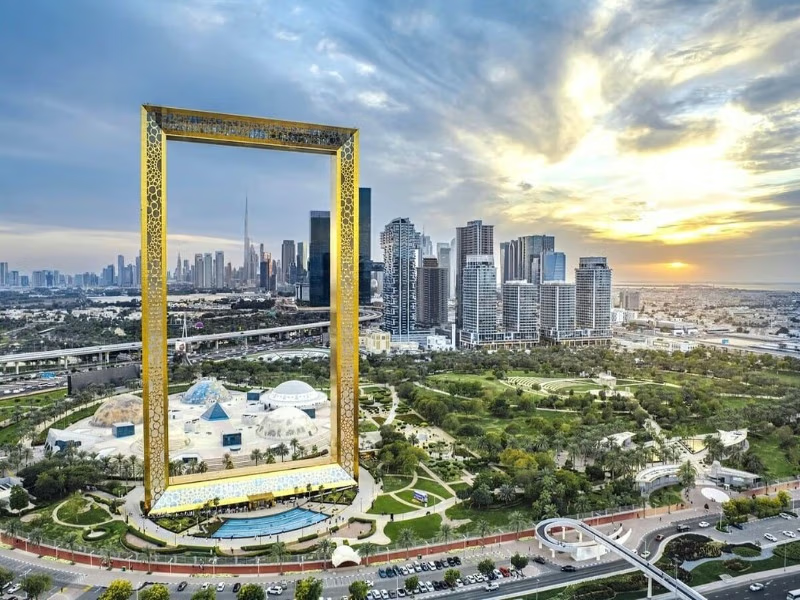
The real estate market in Dubai took on a new direction of growth in 2025, and this was one of the most transformative years in the history of the city.
The growth in population, migration to the end-users, and strategic supply implementation altogether compelled the market to peak transaction volumes, entrenching Dubai as a world investment hub and as a permanent residence for a new generation of residents.
Provident Estate’s 2025 Market Overview reported that the emirate registered 213, 700 residential transactions in the previous year, which was an increase of 6.9 percent year-on-year rise, with total sales value reaching AED681 billion ($185.43 billion).
Prices sustained their structural upward movement as average sale prices increased 7.6 percent, which was sentiment-driven by lifestyle-based relocations as opposed to speculative turnover.
Dubai reached a historic population milestone in 2025 with a total population of more than 4.03 million, and the influx of new residents is more than 208,000 residents opting to work in the city, lifestyle, and long-term settlement.
Over 1.35 million residents have moved to the emirate since 2014, establishing a long-term demand base that still redefines housing requirements.
CEO of Provident Estate, Loai Al Fakir, said, “Dubai’s real estate story is no longer just about opportunity — it’s about permanence. People are not only investing here; they are building their futures here. That shift has redefined demand, reshaped community priorities, and positioned Dubai as the most resilient real estate market globally.”
The main buyer group of 31-45 dominated transactions, and the most significant segment was the 36-40 group, which shows clearly that stability, career maturity, and family planning are some of the factors that drive buying decisions.
Throughout the Dubai real estate market, apartments stood as the dominant element in the transaction action, with Jumeirah Village Circle, Business Bay, and Dubai Marina receiving a substantial share of the demand.
Therefore, the units that performed best in the secondary and off-plan are one-bedroom units due to the demand from new residents and young professionals. Villas, on the other hand, kept on cementing the end-user commitment; four-bedroom plans dominated both the completed and off-plan deals.
The areas, including Wadi Al Safa, Al Hebiah fifth, and Dubai south were the main locations where family buyers were interested in living in the long term in communities.
Unit sets about 96,500 for handover in 2026
Developers remained disciplined in delivery forecasts, with 96,500 units expected to hand over in 2026, concentrated across:
- Dubai Creek Harbour
- Dubai Hills Estate
- Damac Lagoons
- Arabian Ranches 3
- Arjan
- Business Bay
Future pipeline is estimated at 84,979 and 45,480 in 2027 and 2028, respectively, which once again supports the consistency between actual occupancy requirements and market delivery.
Al Fakir further added, “2025 confirmed that Dubai is no longer in a price cycle — it is in a population cycle. Demand is anchored in resident growth, resale continues to reflect lived-in preference, and off-plan remains powered by strategic communities rather than speculation. With population momentum showing no signs of slowing, fundamentals position 2026 as another year of structural market expansion.”