

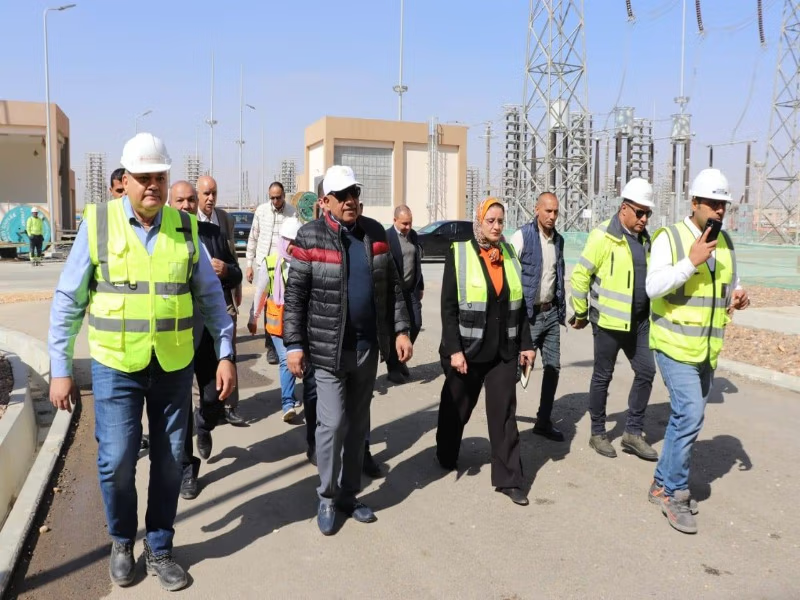
The interconnection of electricity between Egypt and Saudi Arabia will enhance energy cooperation and economic integration in the region, the Egyptian Minister of Electricity and Renewable Energy stated when he was visiting a major cross-border power facility.
Mahmoud Esmat commented during a visit to the Egypt-Saudi electricity interconnection station between the power systems of the two countries, during which he noted the progress of construction and the testing of the equipment before the start of trial operations in the coming weeks, according to the Egyptian State Information Service.
The project is said to be the first of its kind in the Middle East in terms of scale, manufacturing technology, operation, and application in grid interconnection lines.
The program contributes to the overall state vision to introduce sustainable solutions to ensure the stability of the national unified grid and improve the reliability and quality of electricity supply.
It also cooperates with Egypt’s allocation of 136.3 billion Egyptian pounds ($2.8 billion) to the electricity and renewable energy sector in its 2025–26 development plan, nearly double the 72.6 billion pounds set aside the previous year.
However, the plan aims at diversifying energy sources, increasing renewable capacity, and enhancing the national grid to address increasing demand.
The statement said, “The minister toured the station’s departments and control and operation center, following up on the completion of testing for all equipment and components in preparation for launching operations and synchronizing the project with the unified power grids of Egypt and Saudi Arabia in the coming weeks.”
It stated, “Esmat reviewed the implementation rate of the project and testing works, as well as the project’s timeline. He highlighted finalization of operational tests at the Badr transformer station and the Sakakin Taba 2 station, as well as the 500 kilovolts overhead transmission line extending approximately 320 km.”
The minister explained that the project is a component of a larger initiative to construct an integrated power network between the two states, enabling a sufficient and flexible exchange of electricity and providing the foundation of a single Arab electricity market.
He further stated that the initiative was an indication of a visionary outlay and an all-in-all strategy to enhance the efficiency of the energy system and even provide the short and long-term solutions to ensure grid stability and improve service quality.