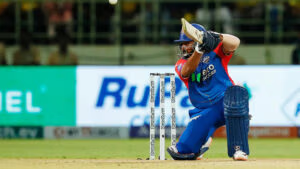

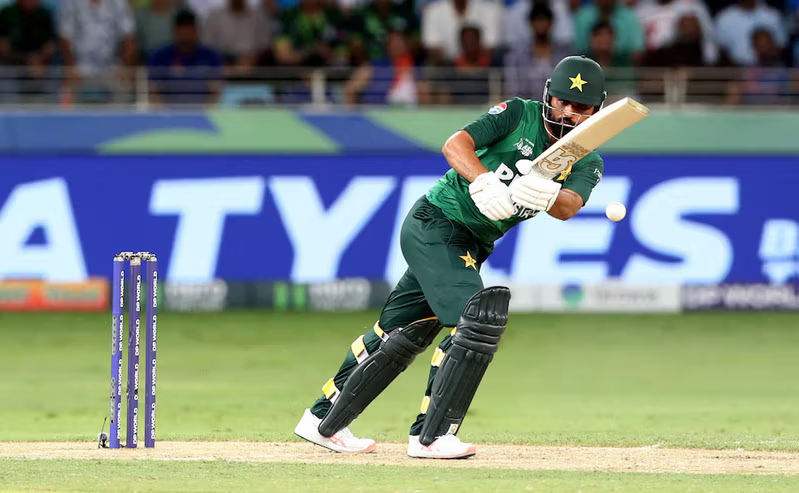
Fakhar Zaman’s ball tampering allegations have cast a shadow over the Pakistan Super League, after the Pakistan Cricket Board (PCB) formally charged the Pakistan international with altering the condition of the ball during a closely contested match.
The incident, which unfolded during a fixture between Lahore Qalandars and Karachi Kings, has triggered disciplinary proceedings that could result in a suspension, depending on the outcome of an ongoing inquiry.
The controversy arose in the final over of the match, when Karachi Kings required 14 runs to win. According to match officials, Zaman was observed handling the ball in the company of teammates Shaheen Shah Afridi and Haris Rauf following an on-field discussion.
Umpires subsequently inspected the ball and ruled that its condition had been unfairly altered. As per the playing conditions, a five-run penalty was imposed on Lahore Qalandars, and the ball was replaced.
The decision proved pivotal. Karachi Kings went on to chase down the revised target, sealing a four-wicket win with three balls to spare.
Zaman has denied any wrongdoing during an initial hearing conducted by match referee Roshan Mahanama. A final decision is expected within 48 hours, after a follow-up review of the incident.
Under the PCB’s code of conduct, ball-tampering is classified as a Level 3 offence, carrying the possibility of a suspension. If found guilty, Zaman could face a minimum one-match ban, with harsher penalties not ruled out depending on the severity of the breach.
The incident has renewed focus on enforcement standards in the Pakistan Super League, particularly in high-stakes matches where regulatory interventions can directly influence outcomes.
Ball-tampering remains one of cricket’s most serious violations, governed under Law 41.3.2, which prohibits players from attempting to alter the condition of the ball through artificial means.
The timing of the decision, in the closing stages of a tight contest, has further amplified debate among analysts and former players regarding consistency in officiating and disciplinary oversight.
For Zaman, a key figure in Pakistan’s white-ball setup, the charge carries both immediate sporting implications and longer-term reputational risks. For the PSL, the episode represents a test of the league’s governance credibility at a time when it continues to expand its commercial footprint and global audience.
The PCB’s final ruling is expected to set a precedent for how similar cases are handled in the tournament moving forward, reinforcing the balance between competitive intensity and regulatory compliance.