
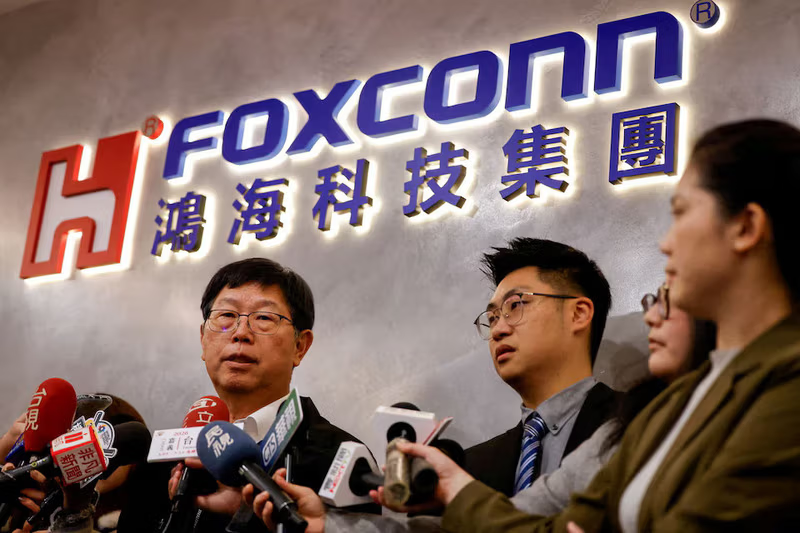
Foxconn Revenue Jumps 30% In First Quarter On Strong AI Demand

Taiwanese manufacturing giant Foxconn has reported a sharp rise in first-quarter revenue, reflecting the growing pull of artificial intelligence across the global technology supply chain. The company said revenue rose 30 percent year-on-year in the January–March period, driven largely by strong demand for AI servers and cloud infrastructure. The surge highlights how quickly spending is shifting toward data centres and high-performance computing, even as consumer electronics demand remains uneven. Foxconn, best known as a key supplier to Apple, has been steadily repositioning itself to capture this shift. While smartphones and traditional electronics still form a large part of its business, newer segments tied to AI and enterprise computing are now becoming central to growth. The momentum in AI-related hardware has been particularly strong. Companies building out data centres are increasing orders for servers and components, creating a new demand cycle that is less dependent on consumer spending patterns. That shift is helping offset softer trends elsewhere. Demand for consumer electronics has been more subdued in recent quarters, as higher interest rates and economic uncertainty weigh on spending. In contrast, investment in AI infrastructure has continued to accelerate, supported by both private sector and government-backed initiatives. Foxconn’s latest numbers suggest that the company is benefiting from being positioned at the intersection of these trends. Its scale in manufacturing, combined with its expanding role in advanced computing hardware, is allowing it to capture a larger share of the evolving tech supply chain. Looking ahead, the outlook remains tied to how sustained the current wave of AI investment proves to be. For now, the trajectory is clear. As companies race to build computing capacity, manufacturers like Foxconn are seeing the impact directly in their order books. The result is a business that is gradually shifting away from its traditional dependence on consumer devices toward a more diversified model, one increasingly anchored in the infrastructure powering the next phase of digital growth. (Image Courtesy:Reuters)

Share it:

Taiwanese manufacturing giant Foxconn has reported a sharp rise in first-quarter revenue, reflecting the growing pull of artificial intelligence across the global technology supply chain.

The company said revenue rose 30 percent year-on-year in the January–March period, driven largely by strong demand for AI servers and cloud infrastructure. The surge highlights how quickly spending is shifting toward data centers and high-performance computing, even as demand for consumer electronics remains uneven.

Foxconn, best known as a key supplier to Apple, has been steadily repositioning itself to capture this shift. While smartphones and traditional electronics still account for a large share of its business, newer segments tied to AI and enterprise computing are becoming central to growth.

The momentum in AI-related hardware has been particularly strong. Companies building out data centers are increasing orders for servers and components, creating a new demand cycle that is less dependent on consumer spending patterns.

That shift is helping offset softer trends elsewhere. Demand for consumer electronics has been more subdued in recent quarters, as higher interest rates and economic uncertainty weigh on spending. In contrast, investment in AI infrastructure has continued to accelerate, supported by both private sector and government-backed initiatives.

Foxconn’s latest numbers suggest the company is benefiting from its position at the intersection of these trends. Its scale in manufacturing, combined with its expanding role in advanced computing hardware, is allowing it to capture a larger share of the evolving tech supply chain.

Looking ahead, the outlook remains tied to how sustained the current wave of AI investment proves to be. For now, the trajectory is clear. As companies race to build computing capacity, manufacturers like Foxconn are seeing the impact directly in their order books.

The result is a business that is gradually shifting away from its traditional dependence on consumer devices toward a more diversified model, one increasingly anchored in the infrastructure powering the next phase of digital growth.