

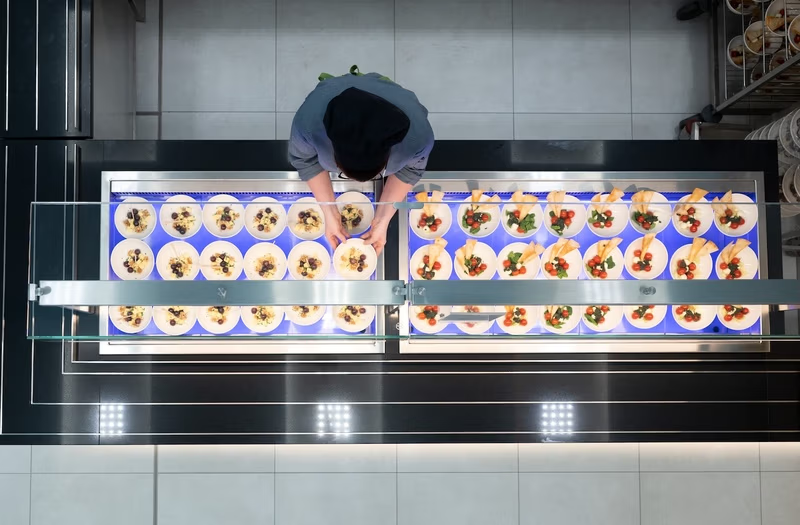
France has expanded its subsidized university dining program to allow all students access to one-euro meals, as the government moves to address rising living costs and growing financial pressure on young people.
The initiative, introduced through university canteens operated by the country’s regional student services network, extends a program that was previously limited to low-income students and those receiving financial aid.
Under the expanded system, students can purchase a three-course meal, including a starter, main course, and dessert, for one euro instead of the standard subsidized price of €3.30.
The policy reflects growing concern across France about student affordability as inflation, housing costs, and food prices continue to weigh on household budgets. Student organizations and social groups have repeatedly warned that financial hardship among university students has intensified in recent years, with some surveys indicating that many students have reduced food spending or skipped meals to manage costs.
The expansion is expected to significantly increase participation in university dining facilities across the country. More than 667,000 students were already benefiting from the subsidized program under previous eligibility rules, while tens of millions of meals are served annually through France’s public university canteen network.
French authorities are also preparing additional funding to support the broader rollout and maintain operational capacity as demand rises.
The measure highlights France’s longstanding emphasis on public welfare and subsidized higher education services. Compared with many developed economies, France maintains relatively low university tuition fees while offering state-supported benefits to reduce financial barriers for students.
The initiative comes at a time when governments across Europe are facing growing pressure to respond to cost-of-living challenges affecting younger populations. Rising rents, transport costs, and food inflation have become increasingly central political and economic concerns in major university cities.
Supporters of the program argue that affordable access to balanced meals can help improve student well-being, academic performance, and social stability during periods of economic strain.
At the same time, some observers have raised questions about whether university dining infrastructure can manage the anticipated increase in demand without affecting service quality or staffing requirements.
The expansion of the one-euro meal program is likely to add to broader international discussions around student affordability and the role of governments in supporting younger generations amid persistent inflationary pressures and economic uncertainty.