

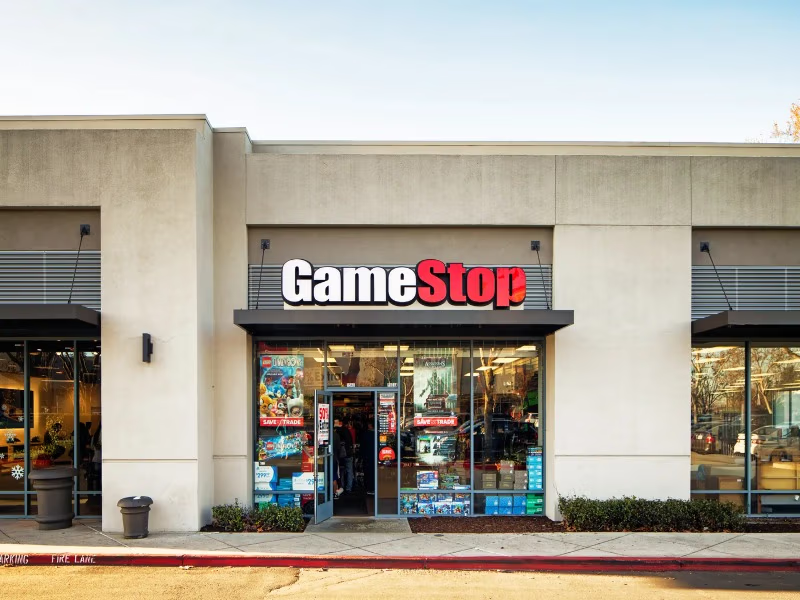
GameStop’s CEO Ryan Cohen informed CNBC in an interview on Friday that GameStop is looking to purchase a publicly traded consumer company that is much larger than the video game retailer in a transaction that would be considered “transformational” for the company.
Cohen stated on the size of the acquisition that “It’s gonna be really big. Really big. Very, very, very big. It’s transformational. Not just for GameStop, but ultimately, within the capital markets … this is something that really has never been done before within the history of the capital markets.”
Cohen refused to specify the goals of the company, merely indicating that he is looking to find a publicly traded consumer company that is undervalued, “high quality, durable, scalable with growth prospects,” and has a “sleepy management team” behind the wheel.
He asserted that if the investment pans out, it has the “potential to make [GameStop] worth several hundreds of billions of dollars.”
Cohen, the co-founder and former CEO of Chewy, said, “If it works, it’s genius. If it doesn’t work, then, you know, it will be totally, totally foolish. But I believe we have the components to make it work, and I’m very confident in the ability to make the asset much, much, much more efficient … we’ve got the governance structure, we’ve got the capital, we have the operational expertise.”
Although Cohen has managed to turn GameStop into a final day’s legacy retailer into a money-making enterprise, it is not clear how a consumer space acquisition will add to its value to the tune of more than $100 billion, which is a Herculean task given its market value at $10.5 billion.
A consumer and retail investment banker was confident that Cohen could not get it off, noting that there are only a few businesses in the industry that could be valued so high by GameStop.
The person added, “I’ve never seen it. Unless you’re talking about radically transforming a business model or something, it just doesn’t happen in retail.” He stated, “It’s easy to say something. It’s a lot harder to do it.”
However, the pickings of GameStop to inflate in size initially became known early in January. The company introduced a new, all-or-nothing equity plan for Cohen, which will be paid only on the event of the company reaching a market value of $100 billion and accumulating $10 billion in cumulative earnings before interest, taxes, depreciation, and amortization.
When the GameStop acquisition plans are successful, and the market value reaches $100 billion or beyond, Cohen has his payday, but he added that he would wish “all shareholders do” as well.
Since taking over as GameStop’s CEO in September 2023, Cohen cut costs, improved the retailer’s profitability, and expanded its collectibles business, even as overall sales have sagged.
The gross margin of GameStop has increased by 7 percentage points, and net income has risen to $77.1 million as of the latest fiscal 2025 third quarter, compared to the last quarter of fiscal 2023, when Cohen assumed control, which reported a loss of $3.1 million.
The retailer recorded a steady annual net income in fiscal 2024 and 2025 after five consecutive years of losses. Michael Burry, the investor who gained fame after placing bets against the U.S. housing market before the financial crisis, has attracted attention from the company as he has recently reported purchasing shares.
Burry said in a Monday Substack post that “Ryan is making lemonade out of lemons. He has a crappy business, and he is milking it best he can while taking advantage of the meme stock phenomenon to raise cash and wait for an opportunity to make a big buy of a real growing cash cow business.”
GameStop has also accumulated a greater than 9 billion cash holding during the past two years, between cash on hand and marketable securities, funds that the company had been utilizing to invest in bitcoin.
When questioned whether GameStop will liquidate its bitcoin holdings to help fund its acquisition plans, Cohen added that he was “not prepared to say,” but called his new strategy “way more compelling than bitcoin.”
Cohen reported, “It’s similar to Berkshire Hathaway, except what Berkshire did in decades, we’re attempting to do in a much shorter time in terms of creating that much value. We can go in there and apply the Chewy and [GameStop] mindset of like brutal efficiency and increase the profitability of the company very, very quickly and so we could capture a lot more value by focusing on this under optimized asset, and then eventually we could move on to the next one, but, you know, we’ll see what happens.”