
Source : WAM
The Gulf Cooperation Council (GCC) countries recorded strong performance in the agriculture, livestock, and fisheries sectors during 2024, highlighting the increasing role of these sectors in enhancing food security and promoting economic diversification across the region, despite environmental and natural challenges, particularly limited arable land and scarce water resources.
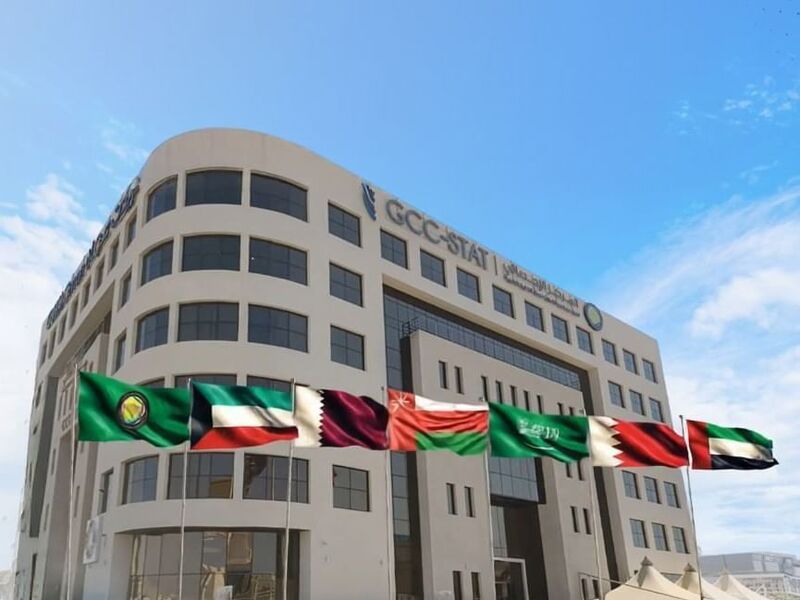
Data released by the Statistical Centre for the Cooperation Council for the Arab Countries of the Gulf indicated that the agriculture and fishing sector contributed approximately $40 billion to the GCC’s gross domestic product at current prices in 2024, marking a 5.1 percent increase compared with 2023, while its share of the GDP remained stable at 1.7 percent.
The value of agricultural and fisheries exports rose to $7.8 billion, up 7.5 percent, while imports reached $38.7 billion, reflecting an increase of 10.1 percent, demonstrating continued GCC efforts to improve production efficiency and strengthen the food security system.
Overall growth in the sector was driven by increases in crop, livestock, and fisheries production, alongside stronger intra-GCC and international trade in agricultural and fisheries products.
Total GCC crop production reached around 12.7 million tonnes in 2024, up 3.9 percent from 12.2 million tonnes in 2023, while total livestock stood at approximately 42.5 million head, representing growth of 3.6 percent compared with the previous year.
Vegetables led plant production by volume, accounting for 45.8 percent of total GCC crop output, highlighting their central role in the region’s food production.
Sheep maintained their dominance in GCC livestock, representing 60.5 percent of total livestock with 25.7 million head, followed by goats at 12.5 million, camels at 3.2 million, and cattle at 1.2 million head.
The report also noted the significant share of goats in some GCC countries, representing 64.4 percent of domestic livestock in the Sultanate of Oman and 44.4 percent in the United Arab Emirates.
In livestock production, key indicators also showed growth. Table egg production reached around 12 billion eggs in 2024, compared with 11 billion in 2023, an increase of 8.4 percent.
Saudi Arabia led this category with a 70.4 percent share, followed by Kuwait at 10.8 percent, the UAE at 9.4 percent, and Oman at 8.2 percent.
Chicken meat production also rose to approximately 1.6 million tonnes in 2024, up from 1.4 million tonnes the previous year, reflecting strong growth of 17.9 percent and continued expansion in the region’s livestock and food production chains.
The fisheries sector also recorded significant growth, with total production reaching around 1.1 million tonnes in 2024, an increase of 12.2 percent compared with 2023, making it one of the fastest-growing food sectors during the year.
This growth reflects the rising interest in fisheries and aquaculture as key avenues to support food security and diversify local production, particularly given the GCC’s extensive coastlines and strong logistics and investment capacities.
Regarding land use, GCC countries cover approximately 2.4 million square kilometres, while agricultural land does not exceed 9.2 thousand square kilometres, representing only 0.4 percent of the total area.
This small proportion highlights the environmental and geographical constraints facing agricultural expansion, prompting GCC countries to focus on efficient resource use, adoption of modern agricultural technologies, and investments in protected agriculture and aquaculture.
In terms of intra-GCC trade, regional exports of agricultural products reached approximately $4.8 billion in 2024, up from $4.5 billion in 2023, a growth of 7.2 percent. Intra-GCC fisheries exports reached $214.4 million, up from $189.3 million in 2023, marking an increase of 13.3 percent.
These figures indicate rising trade and food integration among GCC countries and reflect the growing role of some member states as regional logistics hubs for the re-export and distribution of agricultural and fisheries products.
The strong performance confirms GCC countries’ progress in strengthening Gulf agricultural integration through a unified strategy aimed at optimising water resource use, securing domestic food supplies, increasing production, and encouraging joint projects with active private-sector participation.
This strategy is supported by several joint GCC programmes, including the Joint Programme for Coordinating Agricultural Plans and Policies, the Joint Programme for Surveys, Utilisation and Maintenance of Natural Resources, and the Joint Programme for Food Agricultural Production. It is also reinforced by unified agricultural laws covering seeds, seedlings and saplings, fertilisers and soil enhancers, agricultural quarantine, pesticides, organic inputs and products, and the management of plant genetic resources for food and agriculture.