
Input WAM
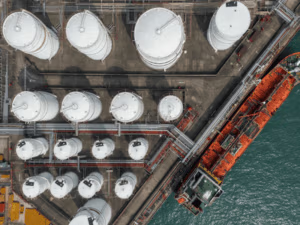
The GCC energy sector continues to strengthen its position as one of the most influential forces in global energy markets, supported by vast natural resources, modern infrastructure, and decades of expertise in managing large-scale production and exports.
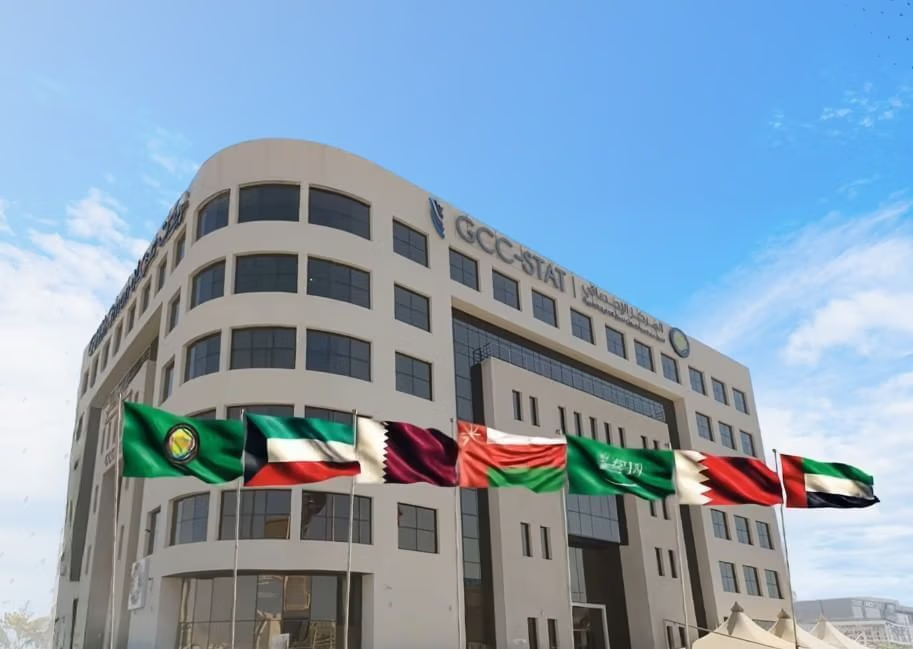
According to new data released by the GCC Statistical Centre, Gulf Cooperation Council countries are increasingly adopting a broader energy strategy that goes beyond traditional oil production. The region is gradually shifting toward a more diversified approach that includes improving production efficiency, expanding renewable energy capacity, and strengthening energy infrastructure.
The report shows that the value added of the Gulf oil sector reached approximately $561.2 billion in 2024 at current market prices, contributing about 24 percent of the region’s GDP. At constant prices, the sector’s value added stood at $541.9 billion, representing 29.3 percent of GDP, highlighting the continued importance of hydrocarbons to the region’s economic structure.
Despite the sector’s strong economic contribution, crude oil production across the GCC countries declined in 2024. Output fell by 5.4 percent to 16.1 million barrels per day, compared with 17.0 million barrels per day in 2023. Crude oil exports also dropped by 7.2 percent, reaching 11.5 million barrels per day, down from 12.3 million barrels per day a year earlier.
Natural gas production remained largely stable. Marketed gas output declined only slightly by 0.4 percent, reaching 442 billion cubic meters in 2024, compared with 443.8 billion cubic meters in 2023, reflecting the steady role of gas in the region’s energy mix.
The report also highlighted the significant growth in oil reserves across the GCC. Between 2020 and 2024, crude oil reserves recorded an average annual growth rate of 30.7 percent, while natural gas reserves grew at an average annual rate of 1 percent.
By 2024, GCC countries collectively held 511.9 billion barrels of crude oil reserves and 44.3 trillion cubic meters of natural gas reserves, reinforcing the region’s strategic importance in global energy supply.
Globally, GCC nations accounted for 21.8 percent of crude oil production and 26.6 percent of global oil exports in 2024. Their contribution to global natural gas markets also remained significant, representing 10 percent of marketed gas production and 13.5 percent of exports worldwide.
The region also continues to play a dominant role in global energy reserves. GCC countries hold 32.7 percent of the world’s proven oil reserves and 21.2 percent of global natural gas reserves, underscoring their long-term influence on international energy markets.
At the same time, Gulf nations are expanding investments in renewable energy as part of their broader transition strategies. Total renewable energy capacity in GCC countries reached 14.2 gigawatts in 2024, accounting for only 0.3 percent of global renewable capacity, indicating significant room for future expansion.
Energy cooperation among GCC countries has also delivered economic benefits. Regional electricity interconnection projects generated economic savings of about $540.5 million, while electricity exchanges between member states reached 1,795.9 gigawatt-hours.
The latest data highlight how GCC countries are balancing their traditional strengths in oil and gas with growing investments in renewable energy and regional integration, reinforcing their role as a central pillar of the global energy system.