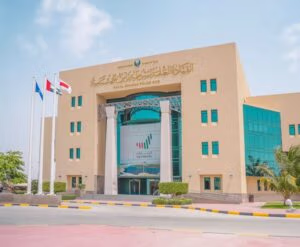


International tourism revenues across Gulf Cooperation Council (GCC) countries climbed to $120.2 billion in 2024, marking a 39.6% increase compared to 2019 and an 8.9% rise from 2023, according to the Statistical Centre for the Cooperation Council for the Arab States of the Gulf (Gulf-Stat).
Strong Inbound Tourism Drives Economic Diversification
The surge highlights the GCC’s continued strength in inbound tourism, with gains recorded across visitor numbers, revenues, and employment. Gulf-Stat noted that tourism remains a key pillar supporting economic diversification and GDP growth across the region.
Tourist Arrivals Exceed Pre-Covid Benchmarks
According to Gulf-Stat’s Travel and Tourism in the GCC Countries 2024 report, international arrivals reached 72.2 million in 2024—up 51.5% from 2019 and 6.1% year-on-year. This growth lifted the GCC’s share of global tourism to 5.2%, reflecting a recovery well beyond pre-pandemic levels.
Connectivity, Visas and Product Diversification Fuel Growth
The rebound was driven by expanded air connectivity, easier visa policies, and a wider range of tourism offerings across leisure, business, and cultural segments.
Middle East Leads Source Markets
Tourists from the Middle East accounted for 18.8% of inbound arrivals, followed by Europe (14.6%) and Asia-Pacific (14.5%). Intra-GCC travel remained dominant, representing 41.3% of total international tourism, supported by increased regional mobility and joint events.
Infrastructure and Jobs See Significant Expansion
Tourism infrastructure grew in tandem with demand, with 11,200 hotel establishments across the GCC offering around 711,500 rooms. Employment in the tourism sector rose to 1.7 million workers in 2024, reflecting a 33% increase since 2020.
Tourism GDP Moves Closer to 2030 Targets
Direct travel and tourism GDP reached $93.5 billion, achieving 64.1% of the GCC Tourism Strategy 2030 target. The sector’s contribution to overall GCC GDP increased to 4.3%.
Sustainability Indicators Show Positive Momentum
Gulf-Stat highlighted improvements in sustainability metrics, including an average stay of 8.4 nights and average tourist spending of $674.6. With achievement levels ranging from 56% to 78% of 2030 strategy goals, the region is well positioned to sustain growth—particularly in cultural, eco, business, and conference tourism.