
The widening conflict in the Middle East is rapidly becoming a global economic concern, as disruptions to energy supplies and trade routes ripple through markets, raising fears of inflation spikes and slower growth worldwide.
At the centre of the crisis is the Strait of Hormuz, one of the world’s most critical energy corridors. With tensions escalating and shipping activity disrupted, markets are increasingly factoring in the risk of constrained oil and gas flows, pushing prices higher and adding pressure on already fragile supply chains.
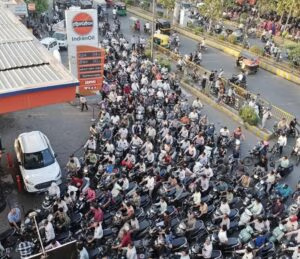
The impact is being felt far beyond the region. Higher crude prices are driving up fuel costs globally, spilling over into transport, manufacturing, and food prices. Economists warn that this could reignite inflation at a time when central banks are already struggling to balance price stability with growth.
Unlike previous economic shocks driven by demand cycles, the current disruption is largely supply-driven. This makes it more difficult for policymakers to respond effectively, as traditional tools such as interest rate adjustments have limited influence over geopolitical events and commodity flows.
Trade networks are also under strain. Disruptions to shipping routes are affecting delivery timelines and increasing costs across industries, from aviation and logistics to agriculture and heavy manufacturing. Fertiliser and energy-linked supply chains are particularly vulnerable, raising concerns about potential knock-on effects on global food production.
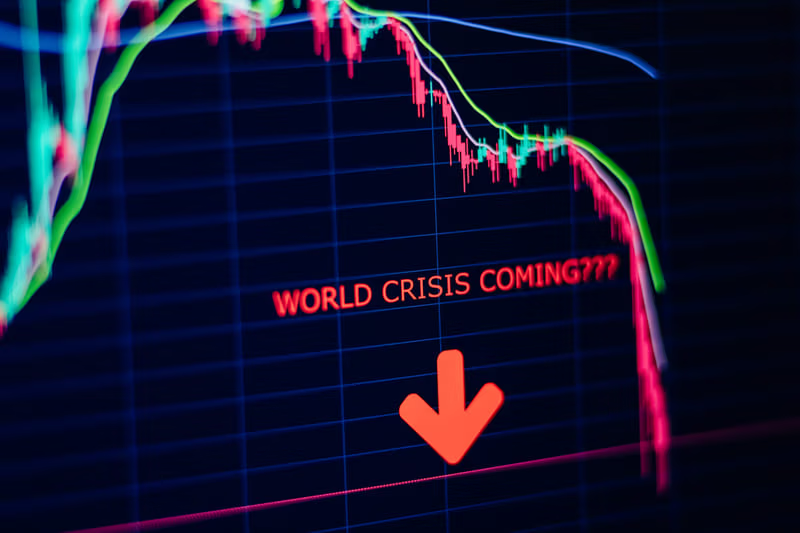
Financial markets have responded with heightened volatility. Investors are reassessing risk exposure, leading to fluctuations across equities, currencies, and bond markets. Safe-haven assets have seen increased demand, reflecting uncertainty about the conflict’s trajectory.
Emerging markets face heightened pressure, especially those heavily dependent on energy imports. Currency depreciation, rising import bills, and fiscal strain are emerging as key risks, potentially widening economic imbalances.
At the same time, energy-exporting nations are navigating a complex dynamic. While higher oil prices can boost revenues, ongoing volatility and logistical disruptions make it difficult to fully capitalise on the situation.
The broader concern is the duration of the conflict. A prolonged crisis could entrench higher energy costs, disrupt global trade patterns, and delay economic recovery in several regions. Conversely, any credible de-escalation could quickly stabilise markets and ease inflationary pressures.
For now, the global economy is entering a phase of heightened uncertainty, where geopolitical developments are once again shaping economic outcomes as much as traditional financial indicators.