

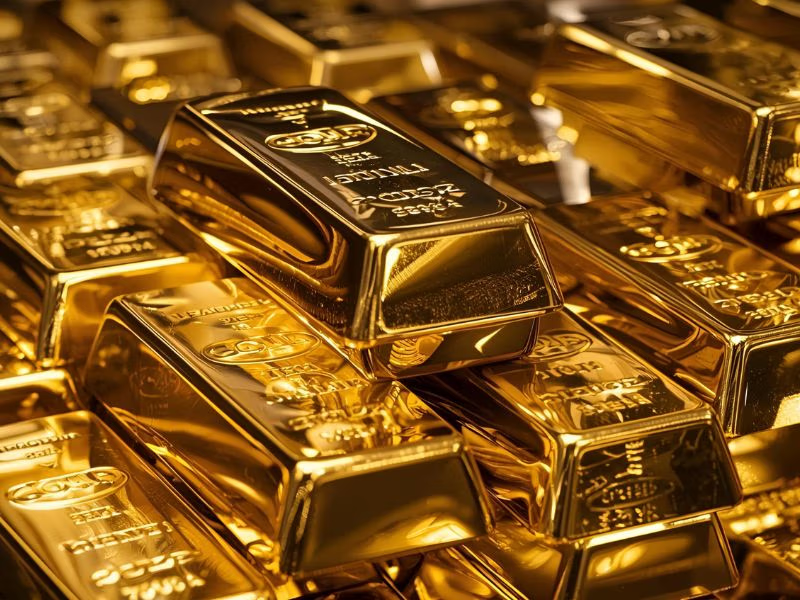
Gold prices surged past the $4,300 mark this week, supported by a weaker US dollar and growing market confidence that the Federal Reserve will continue cutting interest rates. The move places gold firmly in focus alongside key commodities and currencies as investors reassess the macroeconomic outlook heading into year-end.
Gold futures climbed 0.3% to $4,347.10 an ounce, while spot gold rose 0.8% to $4,314.10 at the time of writing. The rally followed a US jobs report showing a rise in unemployment last month, data that reinforced expectations of further Federal Reserve easing and pushed the dollar lower.
As per reports, the US dollar index (DX-Y.NYB), which tracks the greenback against a basket of six major currencies, slipped to a two-month low, making dollar-denominated bullion more attractive to overseas buyers. Last week’s quarter-point rate cut by the Federal Open Market Committee, combined with comments from Chair Jerome Powell that investors interpreted as less hawkish than expected, further fueled demand.
Markets are now pricing in two additional 25 basis-point rate cuts in 2026, a supportive backdrop for non-yielding assets such as gold.
A standout year for gold
In the UAE, gold is on track to close 2025 as one of the best-performing assets globally, rising nearly 60% year-to-date—its strongest annual performance in more than 45 years, according to Farhan Badami, Market Analyst at eToro.
“Markets remain convinced that a December rate cut is coming, and the backdrop still supports that view,” Badami said, noting that despite some volatility, inflation has remained largely contained.
He added that recent tariff policies have not reignited the kind of inflationary pressures that would force the Federal Reserve into a more aggressive stance. At the same time, the ongoing US government shutdown has complicated policymaking, with officials operating without a full flow of economic data. Still, investor confidence has held firm, with the S&P 500 climbing around 5% since its November low, an indication that expectations for further easing are already priced in.
Fed communication in focus
As markets head into the Federal Reserve’s final meeting of the year, Badami believes Chair Jerome Powell faces a delicate communications challenge. “He needs to strike a balance between confidence that inflation continues to move in the right direction and reassurance that the Fed is not cutting because it fears a sharper downturn,” he said.
Although gold prices have eased slightly from the record highs reached in October, the broader environment remains supportive. Throughout 2025, bullion has benefited from persistent safe-haven demand, ongoing geopolitical tensions, and substantial central bank buying.
ETF inflows have reached record levels, highlighting strong interest across the investor spectrum, from large institutions to younger retail participants, further reinforcing gold’s role as a portfolio stabilizer in uncertain times.
Looking toward 2026, Badami argues that the key question is no longer whether gold will retain its safe-haven appeal, but how high prices could climb if uncertainty persists. “Central banks look set to keep accumulating bullion as they hedge against currency and inflation risks. That steady official demand remains a strong anchor for prices, and USD $5,000 is not off the table,” he said.
The macroeconomic forces that propelled gold to all-time highs in 2025, geopolitical instability, inflation concerns, and shifting US fiscal dynamics, show little sign of easing. With President Donald Trump’s administration contributing to global uncertainty, Badami believes the outlook remains constructive.
“This environment sets the stage for another year in which investors continue to seek comfort, stability, and protection in the world’s oldest safe haven,” he concluded.