
Over the next decade, the global economy will need to channel around 3.5% of its annual GDP, which is equivalent to $4.2 trillion, into strengthening social, transport, energy, and digital infrastructure to keep pace with megatrends like rapid urbanization, supply chain disruptions, and AI-driven digital transformation.
In January 2024, asset management giant BlackRock completed a $12.5 billion acquisition of Global Infrastructure Partners (GIP), a leading global infrastructure investment firm. One of the world’s largest asset managers clearly recognizes opportunity when it arises. This time, it’s the projected $15 trillion global infrastructure investment gap expected by 2040.
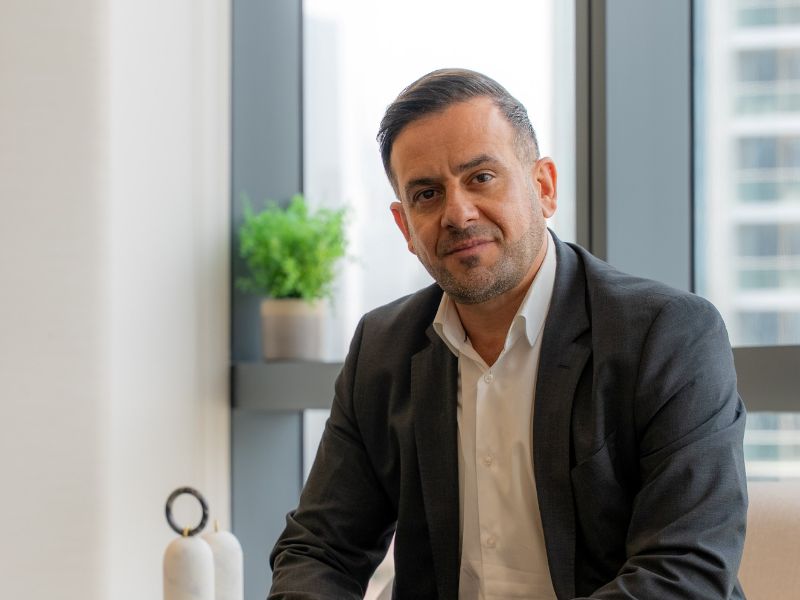
As per Haider Abduljabbar, Executive Director, TownX, “In the UAE, one of the most dynamic destinations for real estate in the world, the government has always played a key role in enabling access to better infrastructure, and consequently, in writing the success story of the sector.”
He added, “Today, as emerging hubs such as Arjan, Jumeirah Village Circle (JVC), and Dubai Science Park evolve, a renewed wave of infrastructure investment could accelerate their growth trajectory. These communities are strategically located, offering proximity to major highways and employment centers, yet they remain in transitional phases of development. Without deliberate and timely infrastructure investment, beyond just roads and utilities, their full potential risks remain untapped.”
Infrastructure projects act as powerful catalysts for economic growth, driving up nearby property values by enhancing accessibility and livability. Transportation upgrades, like metro lines, make areas more appealing to residents and businesses.
“The development of integrated transport systems, including efficient road networks, pedestrian-friendly pathways, and access to enhanced public transportation, can drastically improve mobility and reduce congestion, a problem that Dubai’s government has been a leader in finding solutions to. Over the past two decades, the government has invested AED 175 billion in transforming the emirate’s road and transport infrastructure. Earlier this year, the Roads and Transport Authority (RTA) began implementing its AI-powered traffic signal control system set for completion in 2026. It uses predictive analytics and digital twin technology to optimize traffic flow across major intersections,” he further explains.
Major opportunities
One of the key growth drivers for areas like Arjan and JVC is managing the balance between rapid development and adequate infrastructure planning. Major governmental initiatives such as the Dubai 2040 Urban Master Plan, and the Dubai Integrated Water and Energy Strategy, signal a clear commitment to inclusive, sustainable urban growth.
These efforts highlight the fact that project development and urban planning must go hand in hand. When strategically aligned with emerging districts, these efforts can create a multiplier effect, attracting residents as well as small and medium enterprises, service providers, and tech-focused industries seeking affordable yet well-connected urban environments.
Dubai Science Park offers a compelling case study. Positioned as a hub for research, innovation, and life sciences, its long-term success depends heavily on the availability of reliable utilities, smart mobility systems, and supportive amenities. Government investment in healthcare infrastructure, digital readiness, and green transport can transform it into one of the region’s most competitive innovation clusters.
Similarly, Arjan, with its growing mix of mid-range housing and lifestyle amenities, would benefit from enhanced access to public transport and traffic management solutions. These improvements would make commuting more efficient, reduce travel times, and enhance overall liveability, thus attracting more families and young professionals.
In JVC, where residential density is increasing rapidly, investments in smart parking systems, green spaces, and sustainable water management can directly elevate property values while strengthening the community’s social and environmental fabric.
The economic case for such strategic infrastructure investment is clear. Studies from global markets show that public infrastructure investment delivers both short-term and long-term economic benefits. In the short term, it drives job creation in construction and boosts aggregate demand, while over the long term, it enhances productivity and efficiency for private businesses, leading to a larger overall increase in real national income. According to the Global Infrastructure Hub’s analysis of over 3,000 estimates, the average output multiplier for public investment is around 0.8 in the first year and rises to 1.5 over 2 to 5 years, with some short-term estimates suggesting that every dollar spent on infrastructure construction can ultimately generate roughly double its initial value in economic output.
Accordingly, every dirham spent on public infrastructure can yield up to double up in broader economic activity, with a direct and indirect impact on real estate value.
In Dubai’s context, where real estate contributes substantially to GDP, this multiplier could translate into up to 20% growth in property values and transaction volumes in well-planned emerging hubs. Ultimately, infrastructure is the invisible engine that powers urban transformation. For developers, investors, and residents alike, it defines the difference between a district that simply exists and one that truly thrives.
Haider Abduljabbar concludes, “As Dubai continues to shape the next phase of its urban evolution, public-private collaboration will be key. Local developers stand ready to work hand-in-hand with government stakeholders to ensure that infrastructure and community development progress in harmony. By aligning private innovation with public investment, we can create next-generation neighborhoods that reinforce Dubai’s position as one of the world’s most liveable and forward-looking cities.”