
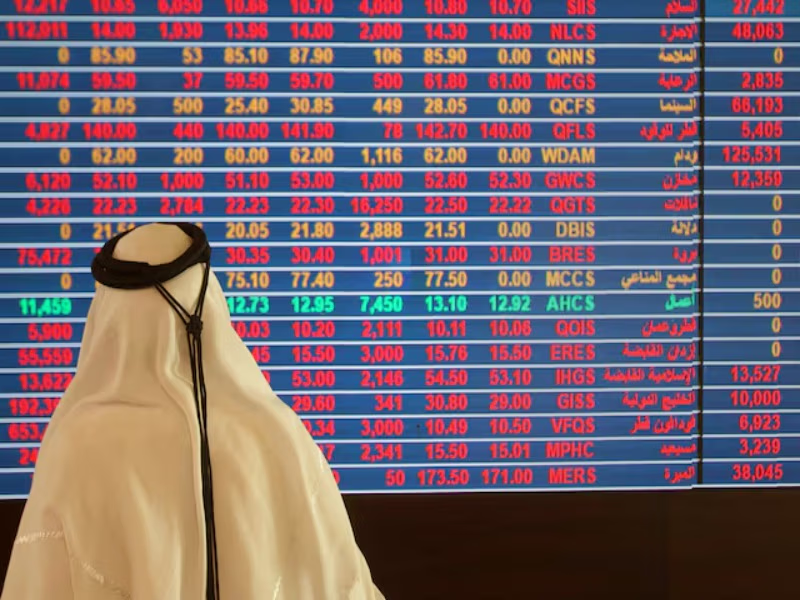
The majority of stock markets in the Gulf declined early on Monday under the influence of a combination of geopolitical and policy concerns, including the U.S.-NATO tensions related to Greenland and ambiguity regarding tariffs and increasing doubts about the independence of the U.S Federal Reserve.
U.S. President Donald Trump threatened to impose a 100 percent tariff on Canada in case it proceeded with a trade agreement with China over the weekend.
He has also warned that he threatened to impose 200 percent tariffs on French wines and champagne, apparently to persuade French President Emmanuel Macron to endorse his Board of Peace initiative.
However, Saudi Arabia’s benchmark index plummeted by 0.2 percent, headed towards a 1 percent decline in Al Rajhi Bank and a 0.6 percent drop in oil giant Saudi Aramco.
Crude prices, a driver in the financial markets of the Gulf, did not change much after increasing by approximately 3 percent on Friday, and traders evaluated the effects of Trump threatening Iran by imposing further sanctions on ships carrying its oil. Therefore, the index slipped by 0.7 percent in Abu Dhabi.
U.S. President Donald Trump took a short-term pause in the markets last week by backing off tariff threats and toning down his rhetoric on possible military action involving Greenland. Eventually, new sanctions against Iran have brought back investor worries.
Dubai’s main share index dropped 1.2 percent, falling by a 1.7 percent slide in blue-chip developer Emaar Properties and a 1.7 percent retreat in toll operator Salik Company.
Thus, the Qatari benchmark surged 0.8 percent, on course to claw back some of its losses from the previous session.