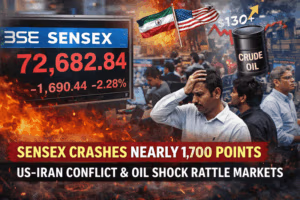

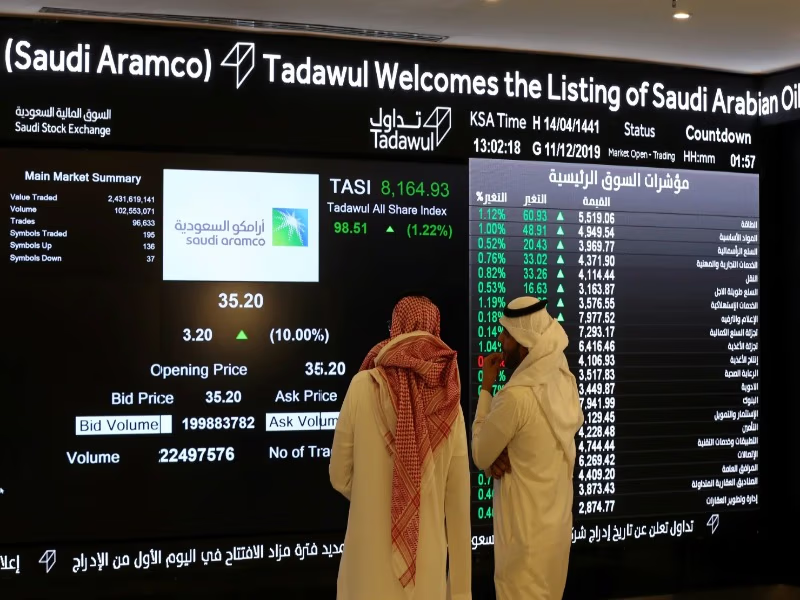
The majority of the stock markets in the Gulf began trading higher on Wednesday, with a marginally lower than expected U.S. inflation data that enhanced future interest rate reduction expectations, though the tensions continuously present in the geopolitical arena held back gains.
U.S. consumer prices increased in December as a result of higher costs in housing and groceries, which supports the opinions of analysts that the Federal Reserve will keep interest rates at this month.
Inflation levels were seen positively by the U.S. President Donald Trump, who once again urged the U.S. Federal Reserve Chair Jerome Powell to reduce interest rates by a significant margin.
However, the investors anticipate two 25 basis point rate reductions this year, and the first one is in June. Gulf markets tend to follow the changes in the expectations of the rates in the U.S., since the majority of the regional currencies are pegged to the dollar.
The benchmark index of Saudi Arabia increased 0.2 percent, and Al Rajhi Bank and Saudi National Bank, the largest bank in the country by assets, surged by 0.5 percent and 0.6 percent, respectively.
Therefore, the main share index of Dubai improved by 0.5 percent, with utility company Dubai Electricity and Water Authority gaining 2.1 percent. The index has increased 0.1 percent in Abu Dhabi.
Trump urged Iranians to continue the protests, stating that help is on the way. Iran, in turn, accused Trump of encouraging political destabilization and inciting violence.
Thus, the Qatari benchmark declined 0.4 percent, and later plummeted by 0.8 percent in petrochemical maker Industries Qatar.