

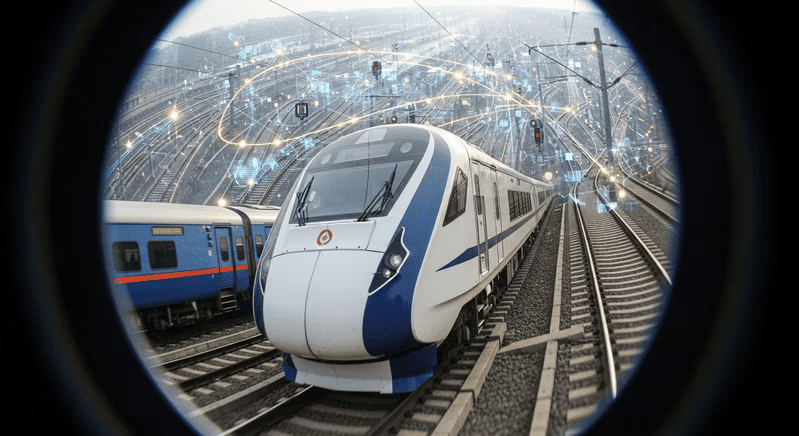
India’s Union Budget for 2026–27 outlined continued investment in the country’s railway network, with the government prioritising high-speed corridors, passenger service upgrades, and safety systems as part of its broader infrastructure strategy.
The budget reiterated plans to develop multiple high-speed rail corridors connecting major urban and economic centres across the country. These corridors are intended to improve intercity travel efficiency and reduce transit times between key regions, supporting economic integration and mobility.
Passenger rail services remain a central focus of the rail programme. The government confirmed the ongoing rollout of Vande Bharat sleeper trains, designed for long-distance overnight travel, alongside further deployment of Amrit Bharat trains aimed at serving general and middle-income passengers. These initiatives are positioned as part of a wider effort to modernise passenger experience and expand capacity on high-demand routes.
Railway safety continued to feature prominently in the budget agenda. The indigenous automatic train protection system, Kavach, is being expanded across additional route kilometres to enhance operational safety and reduce accident risks. The government has indicated that the deployment of safety technology will remain a priority alongside network expansion.
From a fiscal perspective, railways are expected to remain one of the largest recipients of capital expenditure within the infrastructure segment. Budget documents and government statements indicate that rail investment will continue at elevated levels, supporting track upgrades, signalling systems, rolling stock procurement, and station redevelopment.
The rail initiatives form part of India’s longer-term infrastructure development framework, which emphasises logistics efficiency, regional connectivity, and capacity creation. While execution timelines will vary across projects, the 2026–27 budget signals policy continuity in rail investment rather than a shift in direction.
For investors and infrastructure stakeholders, the budget reinforces the government’s reliance on railways as a core pillar of public capital expenditure, with implications for engineering, manufacturing, signalling, and rolling stock supply chains over the medium term.