
India has initiated a high-level review of its security and preparedness framework amid intensifying global geopolitical tensions, reflecting growing concerns about potential spillovers into economic and strategic domains.
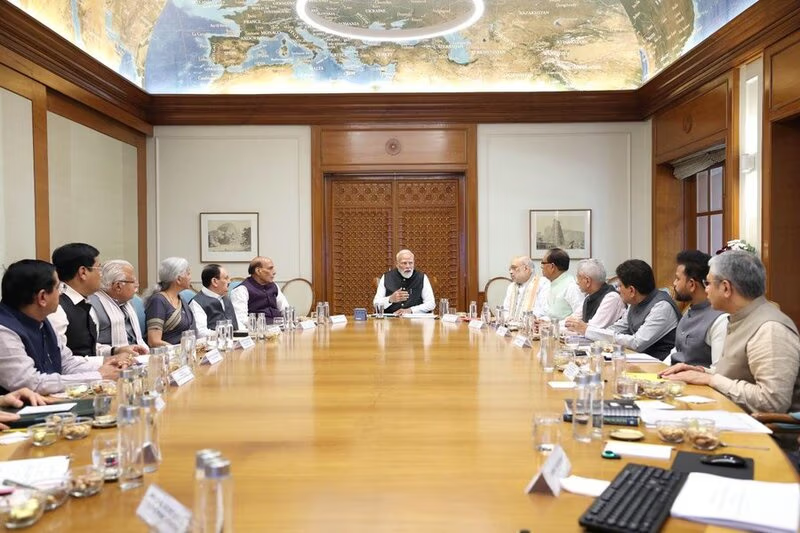
According to an official government statement, Prime Minister Narendra Modi chaired a meeting of the Cabinet Committee on Security (CCS) to assess the evolving situation and review mitigation strategies.
Chaired a meeting of the CCS to review the mitigating measures in the wake of the ongoing conflict in West Asia.
— Narendra Modi (@narendramodi) March 22, 2026
We had extensive discussions on short, medium and long term measures, including ensuring continued availability of fertilisers for farmers, diversifying import… pic.twitter.com/a0SQoGf39e
The CCS meeting, the highest decision-making body on national security matters, focused on evaluating the current global environment and ensuring India’s readiness to respond to emerging risks.
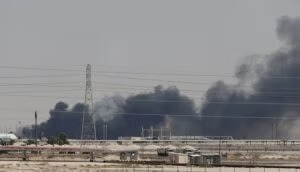
The review comes at a time when escalating conflict in the Middle East is beginning to impact global energy markets, supply chains, and financial stability, all of which have direct implications for India.
Government discussions centered on preparedness measures and potential responses to safeguard national interests.
While specific operational details were not disclosed, such reviews typically involve:
- Energy security planning
- Supply chain resilience
- Financial market stability
- Strategic and defence readiness
The emphasis on mitigation indicates a proactive approach aimed at minimizing economic and security disruptions.
Any prolonged instability in key regions could:
- Increase import costs
- Fuel inflationary pressures
- Impact fiscal and current account balances
The government’s review underscores the importance of aligning economic policy with evolving geopolitical risks.
The timing of the meeting highlights the interconnected nature of modern crises, where geopolitical developments quickly translate into economic consequences.
Recent volatility in global markets, including sharp movements in oil, equities, and currencies, has reinforced the need for coordinated policy responses.
With the global situation still fluid, India is expected to continue to closely monitor developments and adjust its strategy as required.
The CCS review signals that policymakers are preparing for multiple scenarios, balancing immediate risks with longer-term economic and security considerations.
For now, the move reflects a broader shift toward pre-emptive governance, where anticipating risks is becoming as critical as responding.