

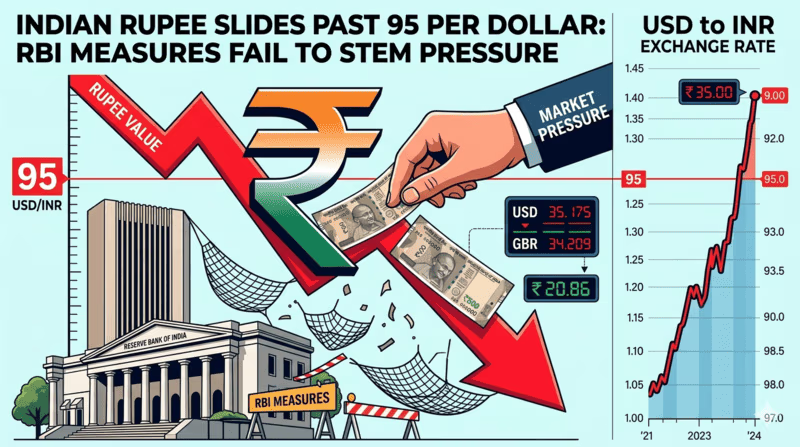
The Indian rupee at 95 per dollar has heightened concerns across financial markets, with the currency weakening past a key psychological threshold despite recent central bank intervention, underscoring the intensity of external and domestic pressures weighing on India’s macroeconomic outlook.
The rupee slipped to a record low of around 95.2 against the U.S. dollar during Monday’s session, extending a multi-day decline and placing it on course for its steepest annual fall in more than a decade. The move comes even after the Reserve Bank of India tightened rules on banks’ foreign exchange positions, a measure that initially offered brief support before losing momentum.
The central bank’s decision to curb banks’ net open positions in foreign currency was designed to temper speculative activity and stabilise the rupee. However, the impact proved short-lived as market participants, including corporates, moved to capitalize on pricing gaps between onshore and offshore markets, adding renewed pressure on the currency. The episode highlights the limits of administrative measures in countering broader macroeconomic forces.
At the core of the rupee’s weakness is a sharp surge in global crude oil prices, which have climbed above $115 per barrel amid escalating geopolitical tensions in the Middle East. For India, a major importer of energy, higher oil prices translate into increased demand for dollars, widening trade deficits, and persistent downward pressure on the currency.
Compounding the situation, foreign institutional investors have continued to pull capital from Indian equities, reflecting a broader shift in global allocation strategies as investors gravitate toward higher-yielding and safer assets. Sustained outflows have weighed not only on equity markets but also on the currency, reinforcing a negative feedback loop between capital flows and exchange rate stability.
The broader financial landscape has also shown signs of strain, with equities experiencing heightened volatility and bond yields firming, suggesting tighter financial conditions. A stronger U.S. dollar, supported by global risk aversion and rising yields, has further exacerbated the rupee’s decline, placing emerging market currencies under pressure.
With the rupee breaching the 95 mark, attention is now turning to the central bank’s next course of action. While the RBI is expected to remain active in smoothing volatility, market participants increasingly view the trajectory of oil prices, global risk sentiment, and capital flows as the primary determinants of direction in the near term.
For investors and policymakers, the latest move signals a critical juncture, reinforcing the sensitivity of India’s external position to global shocks even as domestic fundamentals remain relatively resilient.