

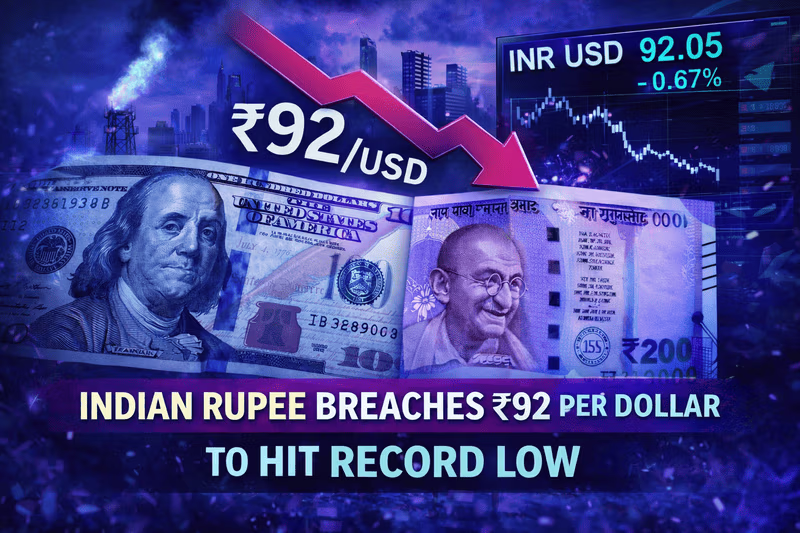
Indian rupee’s record low was marked after the currency breached the 92 per dollar level for the first time, pressured by escalating Middle East tensions, a surge in crude oil prices, and broad dollar strength that triggered heavy selling in emerging market currencies. The rupee’s slide reflects a sharp deterioration in global risk sentiment as investors reassess exposure to energy-importing economies amid concerns that disruptions in oil supply routes could push inflation higher and widen current account deficits. India, which imports a significant portion of its crude oil requirements, remains particularly sensitive to sustained increases in energy prices, making currency markets quick to price in potential macroeconomic strain.
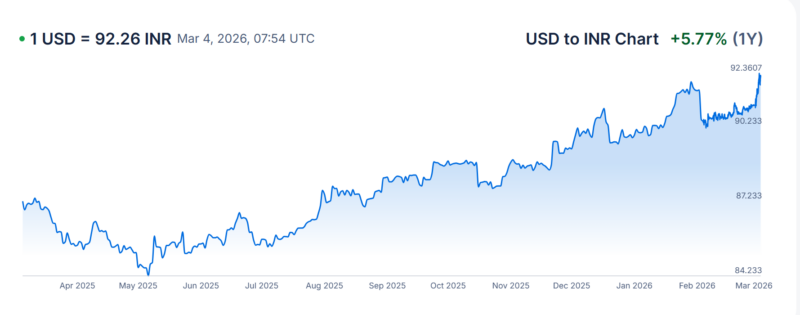
Market participants pointed to a combination of external and domestic factors behind the move, including elevated crude benchmarks, foreign institutional investor outflows, and strengthening of the US dollar against major global currencies. Rising oil prices increase India’s import bill, thereby exerting pressure on the trade balance and intensifying demand for dollars from oil marketing companies and other importers. At the same time, risk aversion in global markets has encouraged investors to move funds toward perceived safe-haven assets, further weighing on the rupee.
Traders indicated that the breach of 92 per dollar was largely driven by offshore demand and stop-loss triggers after the currency hovered near previous lows in recent sessions. The psychological breach of a key level often amplifies near-term volatility, particularly when external shocks dominate market narratives. The weakness in the rupee coincides with volatility in domestic equity markets, where benchmark indices have also faced selling pressure linked to geopolitical uncertainty and crude price spikes.
The Reserve Bank of India is closely watched in such scenarios, with market participants assessing whether the central bank may intervene in the foreign exchange market to smooth excessive volatility. While the RBI typically avoids defending specific levels, it has historically acted to curb disorderly movements that could destabilize financial markets.
Economists note that a weaker rupee can have mixed implications for the economy. While it may support export competitiveness, it also raises import costs and can add to inflationary pressures, particularly when energy prices are already elevated. Higher inflation could, in turn, influence monetary policy expectations and interest rate trajectories in the months ahead.
The Indian rupee’s record low underscores how tightly linked currency markets are to geopolitical developments and commodity price movements. With Middle East tensions still evolving and oil markets remaining volatile, traders expect continued sensitivity in the rupee-dollar pair, with global risk appetite and energy prices likely to remain key drivers in the near term.