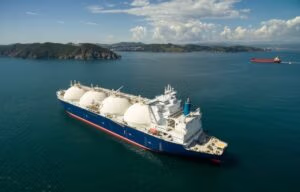

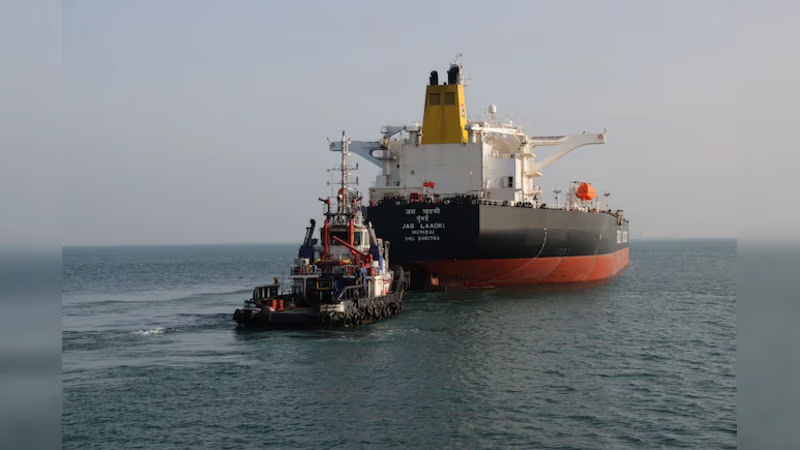
India’s crude imports have come under sharp scrutiny as the ongoing West Asia crisis disrupts key supply routes and affects oil flows into the country, according to a report by Systematix Research.
The report highlights that escalating geopolitical tensions in the region have significantly affected oil shipments, particularly through critical routes such as the Strait of Hormuz, which handles a substantial share of global crude trade. Any disruption in this corridor has direct implications for countries like India, which rely heavily on imported oil to meet domestic demand.
“India’s crude imports have taken a big hit due to the West Asia crisis,” Systematix Research said, pointing to delays, supply uncertainty, and rising logistics costs impacting procurement strategies.
India imports more than 80 percent of its crude oil requirements, making it highly sensitive to global supply disruptions and price volatility. The current situation has forced refiners to reassess sourcing strategies and explore alternative supply routes and suppliers to ensure continuity.
The crisis has also led to a sharp rise in freight and insurance costs, as tanker operators face increased risks navigating through conflict-affected zones. This has further increased the landed cost of crude for Indian refiners, potentially affecting fuel prices and inflation.
“Disruptions in key shipping lanes are not only affecting supply but also increasing costs across the value chain,” the report noted.
Analysts warn that prolonged instability in West Asia could tighten global oil supply and keep prices elevated, putting additional pressure on import-dependent economies. For India, this could translate into higher energy costs, a wider trade deficit, and potential inflationary pressures.
At the same time, refiners are working to diversify sourcing by increasing imports from regions such as Russia, the United States, and Africa, while also adjusting refinery runs based on available crude grades.
The report suggests that while India has managed similar disruptions in the past through diversification and strategic reserves, the current crisis underscores the importance of energy security and supply chain resilience.
With global markets closely tracking developments in West Asia, the impact of India’s crude imports is expected to remain a key concern for policymakers and industry players in the near term.