
Iran Interim Leadership Council Activated After Supreme Leader’s Death
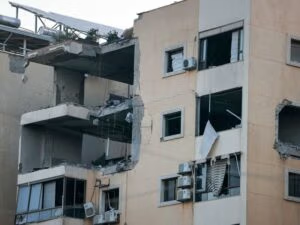
The Iran interim leadership council has assumed temporary authority following the death of Supreme Leader Ayatollah Ali Khamenei in Israeli and United States air strikes. Under Article 111 of Iran’s constitution, when the position of the supreme leader becomes vacant, a three member provisional body immediately takes over his constitutional responsibilities. This safeguard is now active, ensuring continuity at the highest level of the Islamic Republic during a period marked by military escalation and political strain.
The Iran interim leadership council will govern only until a permanent successor is chosen. However, during this transitional phase, it exercises the full constitutional powers previously held by the supreme leader. That includes oversight of key state institutions and strategic direction at a sensitive geopolitical moment.
Understanding the Constitutional Transition
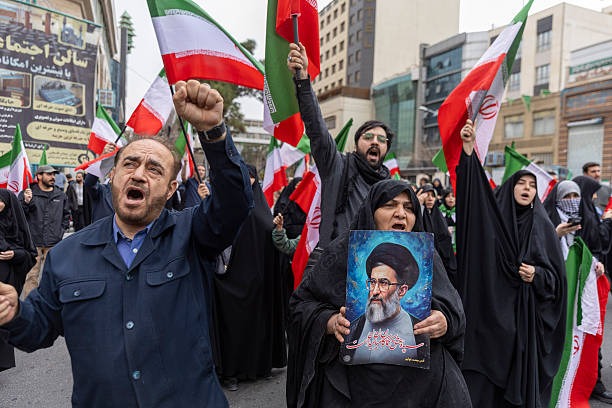
Iran’s leadership system includes a built in mechanism to prevent instability at the top of the state. When the office of the supreme leader becomes vacant, authority transfers automatically to a temporary council composed of senior officials from different pillars of power. This structure is not improvised. It is explicitly defined in the constitution.
The council’s role is limited but significant. It cannot permanently alter the political framework. Instead, it preserves institutional continuity while the Assembly of Experts begins the formal process of selecting a new supreme leader. Although the constitution requires the selection to occur in the shortest possible time, it does not impose a strict deadline.
Masoud Pezeshkian and Executive Authority
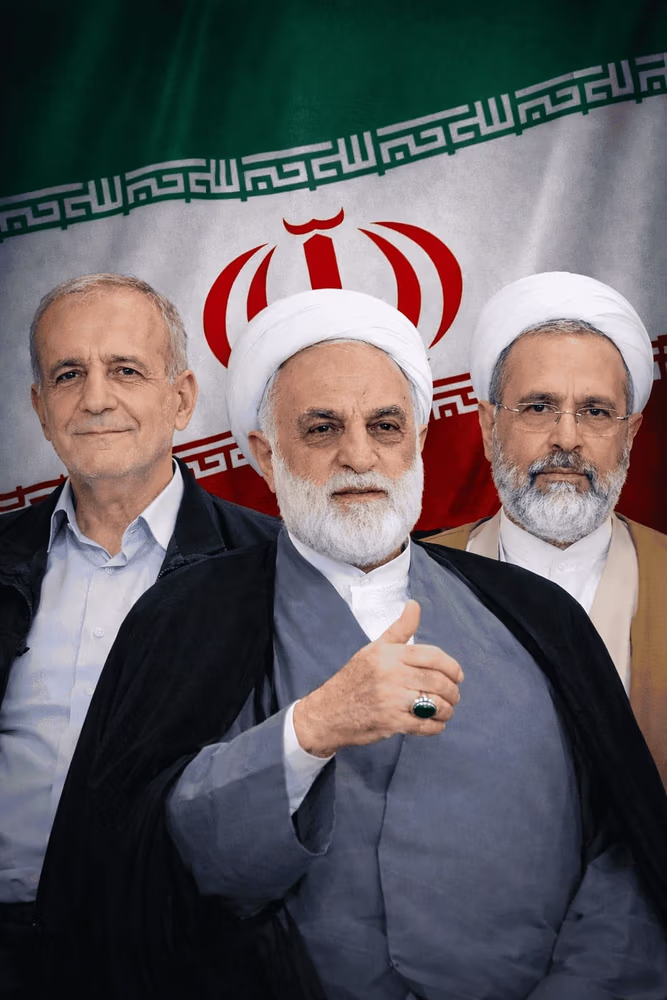
President Masoud Pezeshkian represents the executive branch within the Iran interim leadership council. A heart surgeon by profession and a veteran of the Iran Iraq War, he entered politics after years in public service. Over time, he served as health minister under President Mohammad Khatami and later represented Tabriz in parliament before winning the presidency in 2024.
Pezeshkian is often described as reform oriented within the framework of the Islamic Republic. He has promoted economic stabilisation and measured international engagement while maintaining loyalty to the constitutional system. Following Khamenei’s death, he described retaliation as a legitimate right, signalling that the interim leadership would maintain continuity in national security policy despite external pressure.
Mohseni Ejei and Judicial Influence
Gholam Hossein Mohseni Ejei brings judicial and security authority into the Iran interim leadership council. Appointed chief justice in July 2021, he oversees the national judiciary and plays a decisive role in shaping legal policy. Earlier in his career, he served as minister of intelligence from 2005 to 2009, then as prosecutor general and first deputy head of the judiciary.
He is widely regarded as aligned with the conservative wing of Iran’s leadership. During episodes of economic unrest and currency instability, he adopted a firm stance against protest activity. His presence within the interim structure reinforces the importance of internal stability during a sensitive political transition.
Ayatollah Alireza Arafi and Clerical Authority
Ayatollah Alireza Arafi represents the clerical establishment inside the Iran interim leadership council. Since 2019, he has served as a member of the Guardian Council, the institution responsible for reviewing legislation for compliance with Islamic principles and vetting electoral candidates. He also holds the position of deputy chairman of the Assembly of Experts.
In addition, Arafi directs Iran’s seminary network and leads Friday prayers in Qom, the country’s most significant religious centre. His dual involvement in both governance and succession oversight places him at the centre of the current transition. Notably, the Assembly of Experts, where he serves in leadership, is the only body constitutionally empowered to appoint the next supreme leader.
What Happens Next in the Succession Process
While the Iran interim leadership council governs temporarily, the Assembly of Experts must convene to deliberate on a successor. The 88 member clerical body selects the new supreme leader by majority vote. Although the constitution does not set an exact timeframe, political observers expect extensive internal consultation before a final announcement is made.
This transitional moment is therefore both procedural and political. On one hand, constitutional mechanisms are functioning as designed. On the other, internal deliberations among senior clerics and power brokers will shape the long term direction of the Islamic Republic.
Until a successor is appointed, the Iran interim leadership council remains the constitutional centre of authority. Its composition reflects continuity across executive, judicial and clerical institutions. Whether the eventual outcome signals policy continuity or subtle recalibration will become clear only once the Assembly completes its deliberations.