
A critical artery for global energy exports has become a flashpoint in a widening Middle East conflict, pushing oil markets into turmoil and raising fears of prolonged disruption in world trade.
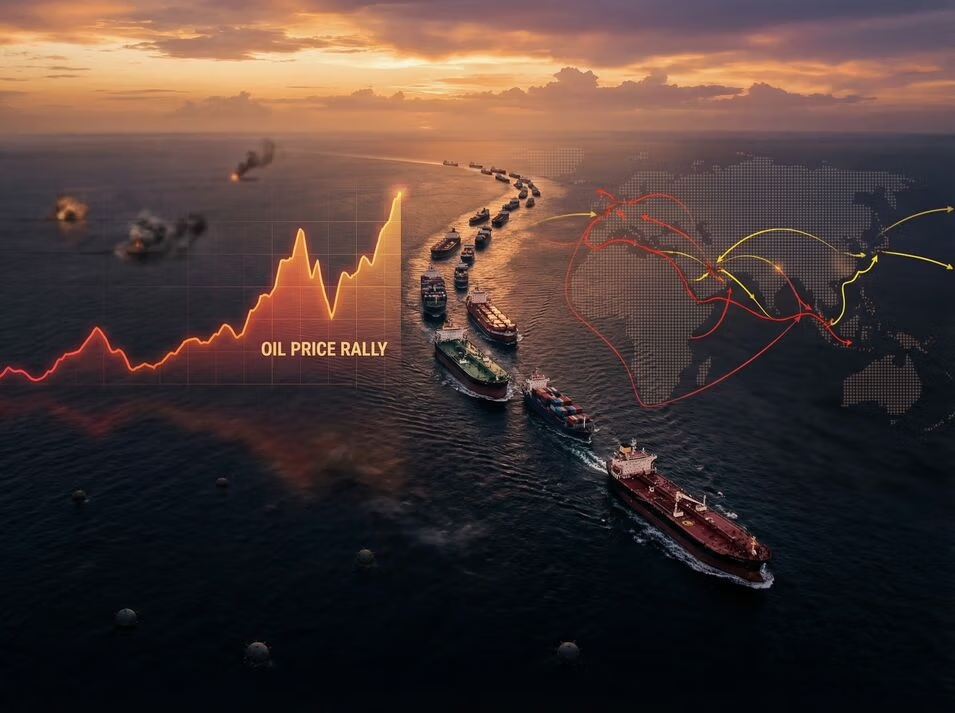
In a dramatic escalation of the conflict between Iran, the United States, and Israel, Tehran’s forces have effectively choked traffic through the Strait of Hormuz, the narrow waterway through which nearly 20 percent of the world’s oil and liquefied natural gas (LNG) supplies flow each day. Analysts say the disruption is now one of the gravest threats to global energy markets in decades.
What Iran Is Doing and Why It Matters
Iran may be outgunned and outspent militarily by the US and Israel, but it holds a strategic advantage: control over the northern approaches to the Strait of Hormuz. By attacking and threatening vessels that attempt to transit the chokepoint, and reportedly laying mines in the waterway, Tehran has stalled traffic on one of the world’s busiest export corridors.
Sources familiar with US intelligence say Iran has deployed a dozen naval mines so far, and though the number is limited, the mere presence of mines in the Strait can be enough to halt shipping as insurers and vessel operators deem the route too risky.
Mines come in different forms, from floating moored devices that detonate on contact to seabed “bottom” mines triggered by magnetic or acoustic signatures. Iran is believed to possess thousands of such weapons, underlining its potency in asymmetric maritime warfare.
Beyond mines, the Islamic Revolutionary Guard Corps Navy (IRGCN) maintains fast attack craft, suicide boats and coastal missiles capable of targeting commercial vessels, hardening the threat environment for global trade.
Recent Attacks Raise Stakes
On March 11, multiple commercial ships were struck in the Strait. A Thai-flagged bulk carrier, the Mayuree Naree, was hit, suffered an explosion in its engine room, and had to be evacuated, with crew still being rescued days later. Two other vessels, including a Japanese container ship and a Marshall Islands-flagged vessel, also sustained damage, underscoring the heightened peril for non-military mariners.
Iran’s armed forces took responsibility for some of the strikes, and the IRGC has warned that any ship trying to pass through would be targeted.
US Military Response and Muskets at Dawn
In response, US Central Command announced it destroyed 16 Iranian mine-laying vessels near the strait, showing video of strikes on what it described as minelayers and other naval assets. US policymakers have warned that if mines are not removed immediately, Tehran could face military repercussions at a level “never before seen”.
President Donald Trump has publicly demanded the removal of the mines and threatened unspecified retaliation, while also claiming that no mines had been confirmed to have been laid — a statement contradicted by intelligence sources and recent attacks.
One growing concern for US strategists is that American minesweeping capability is weaker than in the past. The US Navy retired its last dedicated minesweepers from the region in late 2025, leaving it reliant on littoral combat ships with a mixed track record for such operations.
Economic Implications for Energy Markets
The closure, even if partial, of the Strait of Hormuz has sent shockwaves through energy markets and poses severe risks to the global economy:
- Almost 15 million barrels per day of crude and 4.5 million barrels per day of refined products are effectively stranded in the Gulf, analysts say, filling regional storage fast and tightening supply.
- Oil prices have surged, with Brent crude spiking above $119 a barrel before settling back, while global benchmark prices and futures markets reflect premium pricing on risk.
- Governments and energy agencies are taking extraordinary measures. The International Energy Agency announced the largest-ever coordinated release from strategic petroleum reserves — 400 million barrels — in an effort to calm markets.
Alternative export routes like pipelines exist but lack the capacity of sea routes. Saudi Arabia’s state energy giant warned of potentially catastrophic market outcomes if flows through the strait remain suspended.
A Return to a Dangerous Pattern
This is not the first time the Strait of Hormuz has been embroiled in conflict. In the 1980s Iran‑Iraq war, both sides targeted shipping in the Gulf, and Iranian‑laid mines severely damaged the US warship USS Samuel B. Roberts in 1988, prompting a strong US naval retaliation. That historic clash partially shaped modern naval mine countermeasure doctrine.
What Comes Next
Market watchers and supply chain experts warn that the longer this standoff persists, the greater the likelihood of structural shortages, higher freight costs, risk premiums and inflationary pressure on fuel and goods worldwide.
Meanwhile, diplomatic efforts continue — including safe‑passage agreements for some national fleets as nations try to protect their own commerce — but uncertainty around future escalation keeps traders on edge.
In a world where energy and geopolitics are inseparable, the Strait of Hormuz has proven once again that it is not just a geographic chokepoint but a potential fulcrum for global economic stability.