
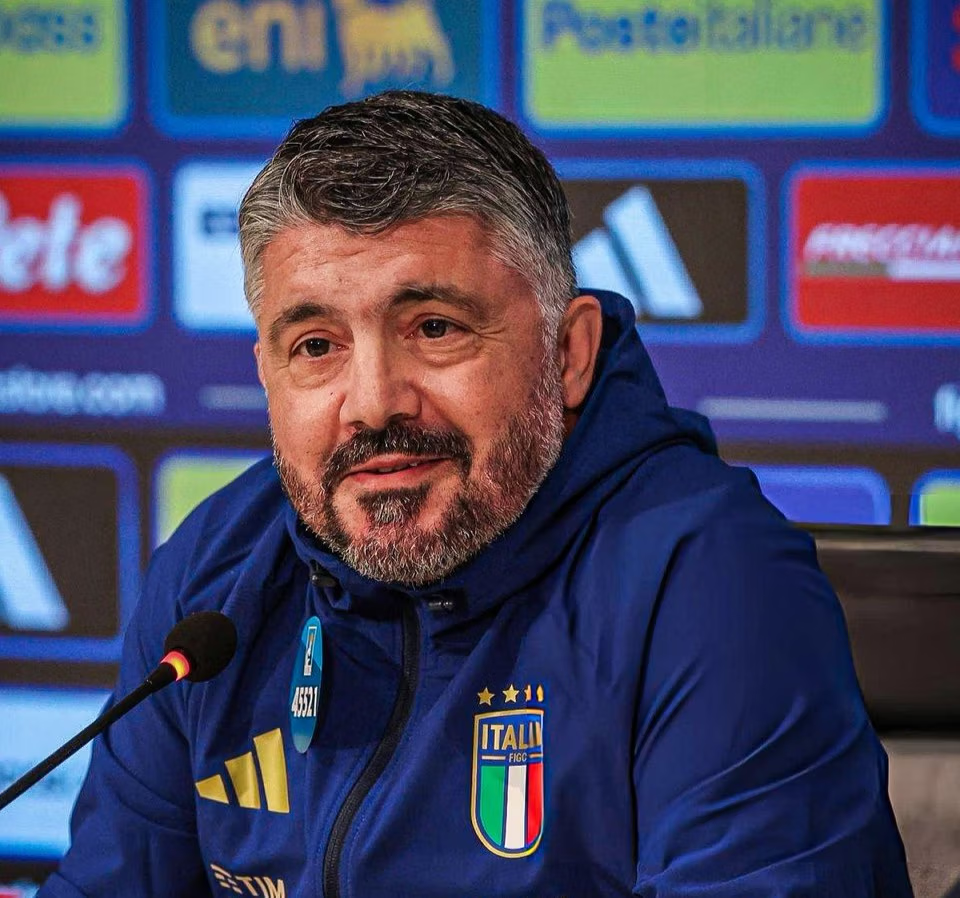
Four-time world champions Italy’s national football team has failed to qualify for the FIFA World Cup for the third consecutive time, marking an unprecedented low for one of football’s most storied nations.
Italy’s hopes of reaching the 2026 tournament ended in dramatic fashion after a playoff final defeat to the Bosnia and Herzegovina national football team. The match finished 1-1 in regulation time before Bosnia secured a 4-1 victory in the penalty shootout, sealing their place at the World Cup.
Italy had taken an early lead through Moise Kean but saw their momentum disrupted after defender Alessandro Bastoni was sent off just before halftime. Bosnia capitalized on the numerical advantage, equalizing late in the second half and forcing the match into penalties, where Italy faltered under pressure.
The result extends a worrying trend for Italy, which has now missed three consecutive World Cups, having also failed to qualify in 2018 and 2022. Their last appearance at football’s biggest tournament came in 2014, a stark contrast to their historic pedigree, which includes four World Cup titles.
This marks the first time a World Cup-winning nation has failed to qualify for three successive editions, underlining the scale of the decline.
Italy’s road to the playoffs had already reflected inconsistency. After finishing second in their qualifying group behind Norway, they were forced into the knockout playoff route, a stage that has repeatedly proved costly in recent cycles.
The latest setback is expected to intensify scrutiny on the team’s structure, development pipeline, and long-term strategy. Despite winning Euro 2020, Italy’s inability to translate success into sustained World Cup qualification has raised broader concerns about the state of the domestic football system.
For Bosnia, the victory represents a historic achievement, securing their first World Cup appearance since 2014 and underlining their resilience in high-pressure knockout scenarios.
For Italy, however, the result leaves a generation of players without World Cup experience and raises fundamental questions about the future direction of one of football’s traditional powerhouses.