
Japan is heading into a snap general election with its public finances under renewed scrutiny.
Prime Minister Sanae Takaichi on Monday called an early vote and pledged to suspend the country’s 8 percent consumption tax on food for two years. The move is aimed at easing pressure on households struggling with high living costs. It also risks reopening long-standing concerns about Japan’s fragile fiscal position.
Japan currently levies an 8 percent consumption tax on food and a 10 percent tax on other goods and services. The revenue helps fund rising social welfare spending for one of the world’s fastest-aging populations, according to government data.
Takaichi said a two-year exemption on the food levy would help families cope with inflation. She said the government would not issue new debt to fund the suspension. Other measures could include reviewing existing subsidies.
“We will overhaul past economic and fiscal policy. My administration will put an end to an excessively tight fiscal policy and a lack of investment for the future,” Takaichi told a press conference.
Markets reacted quickly. The prospect of a tax cut, combined with expectations that Takaichi would push more expansionary fiscal policies after an election win, sent bond yields sharply higher. The yield on the 10-year Japanese government bond rose to 2.275 percent on Monday, the highest level in 27 years.
Investors have grown increasingly sensitive to fiscal risks in Japan. Public debt already exceeds 250 percent of gross domestic product, the highest ratio among major economies, according to International Monetary Fund data. Even small policy shifts can move bond markets.
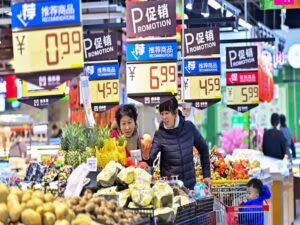
The election, scheduled for February 8, comes as inflation remains above the Bank of Japan’s 2 percent target for nearly four years. Rising food prices have been a key driver, fueling voter frustration and intensifying pressure on politicians to act.
Opposition parties have seized on that discontent. Several have called for consumption tax cuts or outright abolition ahead of the vote. A new political party formed last week from two major opposition groups said on Monday it wants to scrap the 8 percent food tax permanently. It proposed creating a sovereign wealth fund to generate revenue for the cut.
Other opposition groups, including the Democratic Party for the People, have also pushed for lower or zero consumption taxes.
Takaichi’s ruling Liberal Democratic Party has long resisted such proposals. The party argues that cutting the consumption tax would undermine market confidence in Japan’s commitment to restoring fiscal discipline.
The numbers are significant. Eliminating the 8 percent food tax would reduce annual government revenue by about 5 trillion yen, or $31.7 billion, according to government estimates. That figure is roughly equivalent to Japan’s total annual spending on education.
Analysts warn that a permanent tax cut would put further strain on public finances and raise the risk of a bond market selloff. The concern is amplified by the scale of current spending. Takaichi’s government has already approved a record budget of $783 billion for the next fiscal year, alongside a large stimulus package aimed at offsetting the rising cost of living.
For voters, the election is about relief from inflation. For markets, it is about fiscal credibility. Japan’s next government will need to balance both.