
Japan is preparing to tap its emergency oil reserves as the conflict in the Middle East disrupts global energy markets and threatens one of the world’s most critical oil shipping routes.
Prime Minister Sanae Takaichi said the country will release crude from its strategic stockpiles to protect the domestic economy from rising fuel prices. The decision highlights how quickly governments are moving to shield their economies as energy markets react to the war and the disruption of shipping near the Strait of Hormuz.
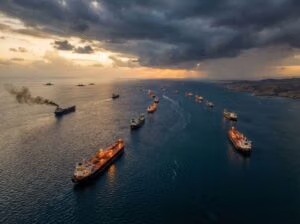
The waterway carries roughly one-fifth of the world’s oil supply. Any disruption there can send global energy prices sharply higher.
Japan Plans Immediate Release From Oil Stockpiles
Takaichi said Japan will begin releasing oil as soon as March 16.
Speaking in a broadcast on NHK, she explained that the government plans to release the equivalent of 15 days of Japan’s oil consumption from private sector stocks. Another month’s worth of supply will come from national reserves.
The move is designed to stabilize domestic energy markets as global prices react to geopolitical tensions.
Strategic oil reserves are emergency stockpiles maintained by governments and companies to protect economies during supply shocks. Countries typically use them when wars, natural disasters or geopolitical conflicts threaten global energy flows.
Global Reserve Release Under Consideration
Japan’s move comes as the International Energy Agency is proposing what could become the largest coordinated release of emergency oil reserves in its history.
A decision could come as soon as Wednesday.
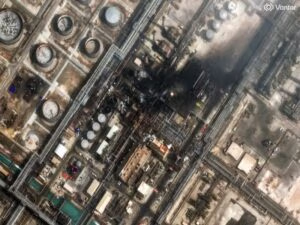
Governments are attempting to contain a surge in energy prices triggered by the Middle East war. The conflict has already disrupted shipping activity through the Strait of Hormuz, a narrow corridor connecting the Persian Gulf with global energy markets.
Roughly 20 percent of the world’s oil shipments typically pass through this route. Even short disruptions can tighten supply and push prices higher across global markets.
Energy Security Is A Major Concern For Japan
Japan is particularly vulnerable to energy shocks.
The country imports almost all of its oil and natural gas, making stable global supply chains essential for its economy. While Japan maintains large strategic reserves equivalent to 254 days of total consumption, prolonged disruptions could still create economic pressure.
A prolonged conflict in the Middle East or a sustained shipping shutdown in the Strait of Hormuz could begin to erode those reserves.
Oil producers in the Middle East also store crude in regional stockpiles that Japan has the right to access during emergencies. That arrangement is designed to provide additional supply security during major disruptions.
Inflation Risks Add Pressure On Government
The decision also reflects growing concern about inflation.
Higher oil prices increase transportation and electricity costs, which can spread across the entire economy. For Japan, which has struggled for decades with slow growth and low inflation, a sudden energy shock could create a more complex economic challenge.
A sharp rise in fuel prices has increased the risk that the country could face stagflation, a combination of weak growth and rising prices.
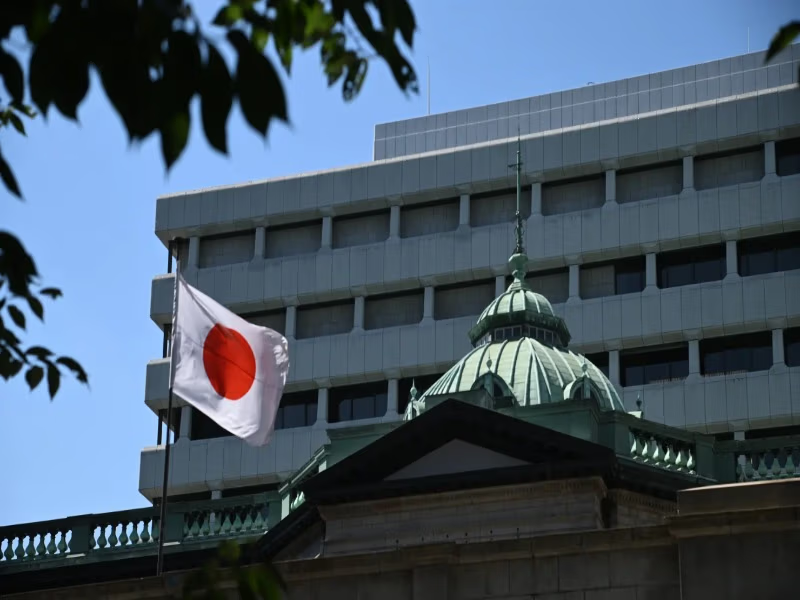
That scenario would put additional pressure on the government to increase spending while complicating the efforts of the Bank of Japan to gradually normalize monetary policy through interest rate increases.
Government Moves To Control Fuel Prices
Takaichi signaled that the government is prepared to intervene further if needed.
“Given that the outlook for the Middle East situation remains uncertain, we will continue to flexibly consider the form of support moving forward,” she said.
The government plans to use existing funds to keep gasoline prices at around 170 yen per liter. Those funds were originally created to prevent sudden spikes in fuel costs.
Japan’s nationwide average gasoline price currently stands at 161.8 yen per liter.
Strategic Reserves Used During Past Energy Crises
Japan has used its oil reserves before during periods of market disruption.
The country released oil held by private sector stockpiles in earlier supply shocks. In 2022 it also released fuel from national reserves after Russia’s invasion of Ukraine triggered volatility across global commodity markets.
The latest move signals how seriously governments are treating the current Middle East crisis. With global oil markets already tightening and shipping routes under pressure, policymakers are moving quickly to prevent energy costs from triggering wider economic fallout.