
The headline inflation rate in Japan dropped to 1.5 percent in January, the lowest value since March 2022. The reading ended a run of 45 straight months in which inflation had remained above the Bank of Japan’s 2 percent target.
The rate of core inflation, without including the fresh food prices, fell to 2 percent, the lowest since January 2024, and the same as the economist forecast of 2 percent in the survey conducted by Reuters; it was down from 2.4 percent in December.
The so-called “core-core” inflation, which is not inclusive of fresh food and energy prices, stood at 2.6 percent as compared to 2.9 percent in December.
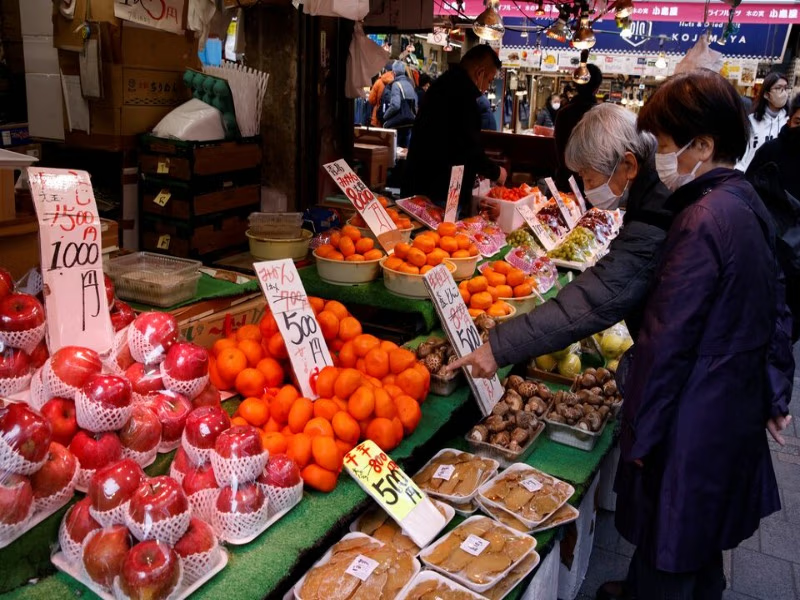
Meanwhile, the sluggishness was spurred by the decreases in the prices of fresh food, raw meat, and fresh flowers, and a more intense fall in petroleum products. Goods inflation dropped to 1.6 percent from 2.7 percent, its lowest level since August 2021, while services inflation held steady at 1.4 percent.
The Bank of Japan revised its inflation expectations in January and raised its forecasts for fiscal 2026, beginning in April. It estimated core inflation of 1.9 percent and “core-core” inflation of 2.2 percent, higher than its estimate of 1.8 percent and 2 percent, respectively, in its 2025 outlook.
The BOJ also stated in the outlook that the year-on-year increase in consumer price inflation will be under 2 percent in the first half of 2026, with food prices becoming balanced, and the government’s bid to reduce the cost of living.
Therefore, the rice inflation decreased in the eighth consecutive month to 27.9 percent. Some of those measures include an election pledge made by Prime Minister Sanae Takaichi to suspend an 8 percent food tax for two years.
Takaichi received the greatest victory on February 8, the Lower House election, with the ruling Liberal Democratic Party winning 316 seats, the robust indication by a single party since the end of World War II.
The inflation rate is recorded following the growth of the Japanese economy, 0.1 percent in the fourth quarter on Monday, avoiding a technical recession.
Although the headline inflation has slowed down, the Bank of Japan would not postpone raising the rates, as predicted by Norihiro Yamaguchi, the lead Japan economist at Oxford Economics.
He reported that the prices of fresh food are still unstable, and the energy prices have dropped due to the cancellation of the fuel tax in Japan in December.
Subsequently, the core-core index, defined as excluding fresh foods and energy, is a better indication of underlying price pressures and is only slightly reduced to 2.6 percent compared to 2.9 percent.
Yamaguchi predicts that the BOJ will hike interest rates to 1 percent during its June meeting, after reviewing data on spring wage negotiations.