

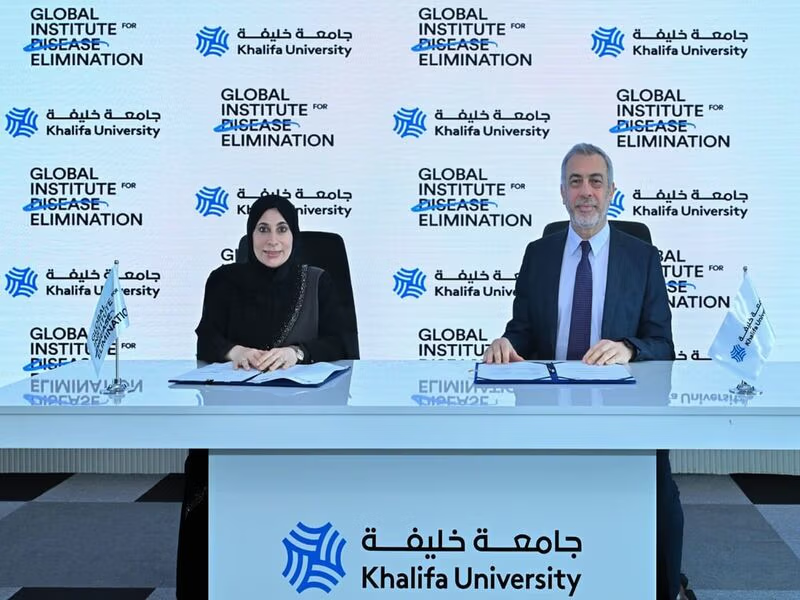
Khalifa University of Science and Technology and the Global Institute for Disease Elimination (GLIDE) have signed a Memorandum of Understanding to collaborate on initiatives aimed at strengthening public health systems and accelerating global efforts to eliminate infectious diseases.
The MoU was signed by Professor Bayan Sharif, Provost of Khalifa University, and Dr. Farida Al Hosani, Deputy CEO of GLIDE, during the Khalifa University Public Health Symposium 2025, held at the university’s main campus.
Under the agreement, the two institutions will collaborate in key areas, including knowledge exchange through GLIDE’s Disease Elimination & Eradication Course (DEEC), participation in GLIDE’s Injaz Fellowship Programme, guest lectures, and other joint initiatives in the future.
Professor Sharif said, “At a moment when resilient health systems are more critical than ever, this collaboration reflects our shared vision of advancing and strengthening education and research to support a stronger and more adaptable healthcare ecosystem. Khalifa University’s expertise in biomedical sciences, genomics, and AI-driven healthcare complements GLIDE’s global leadership in tackling infectious diseases and together, we aim to create impact that reaches beyond the UAE and across the world.”
Simon Bland, CEO of GLIDE, said that this partnership marks an important step in building the knowledge and expertise needed to eliminate infectious diseases, strengthening public health capacity in the UAE and beyond, and driving tangible progress toward disease elimination.
Dr. Al Hosani said, “Collaboration is key to ending infectious diseases. Through this MoU, we are not only investing in cutting-edge research and education but also empowering the next generation of public health leaders. In line with the UAE’s vision to be a global hub for innovation and health, this partnership will help support national capacity and deliver sustainable solutions that protect communities and accelerate progress towards a disease-free future.”
Dr. Habiba Alsafar, Dean of College of Medicine and Health Sciences, said that this collaboration helps to create opportunities for faculty, students and researchers to contribute to programmes that directly address diseases, while building the skills and solutions needed to tackle future health threats.
(Inputs from WAM)