
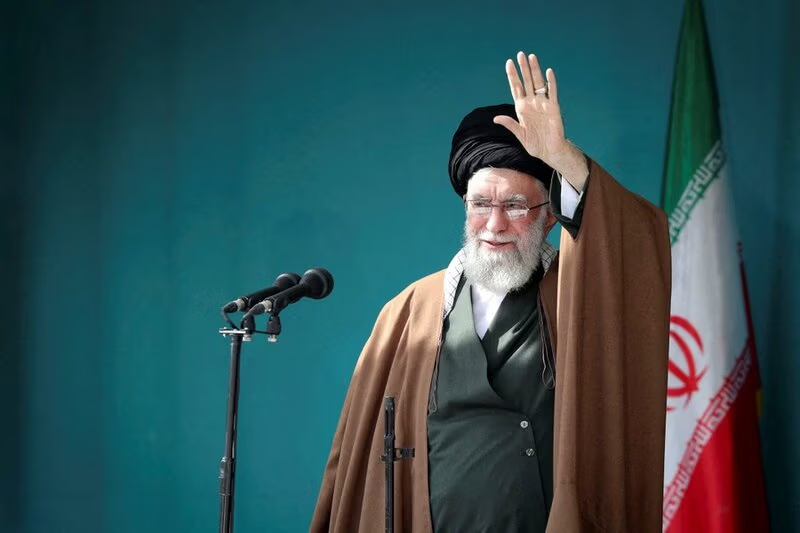
Iran’s Supreme Leader Ali Khamenei has reportedly been killed following Israeli military strikes on Tehran, marking a potentially historic turning point for the Islamic Republic and dramatically escalating tensions across the Middle East.
Explosions were reported in several parts of the Iranian capital during what Israeli officials described as a preventive military operation targeting strategic sites. Subsequent reports from international media indicated that Khamenei, who had led Iran since 1989, was fatally wounded during the strikes. Iranian state media later confirmed his death, though the detailed circumstances surrounding the incident remain limited.
Khamenei’s death creates immediate uncertainty over Iran’s leadership structure. As Supreme Leader, he held ultimate authority over the country’s political, military, and religious institutions, including control of the armed forces and oversight of nuclear policy. His passing could trigger a complex succession process managed by the Assembly of Experts, the clerical body responsible for appointing a new Supreme Leader.
The development comes amid escalating hostilities between Israel and Iran following stalled diplomatic negotiations over Tehran’s nuclear programme. Israeli officials have said the operation was aimed at neutralising what they considered imminent security threats, though the reported death of Iran’s highest authority significantly raises the stakes of the confrontation.
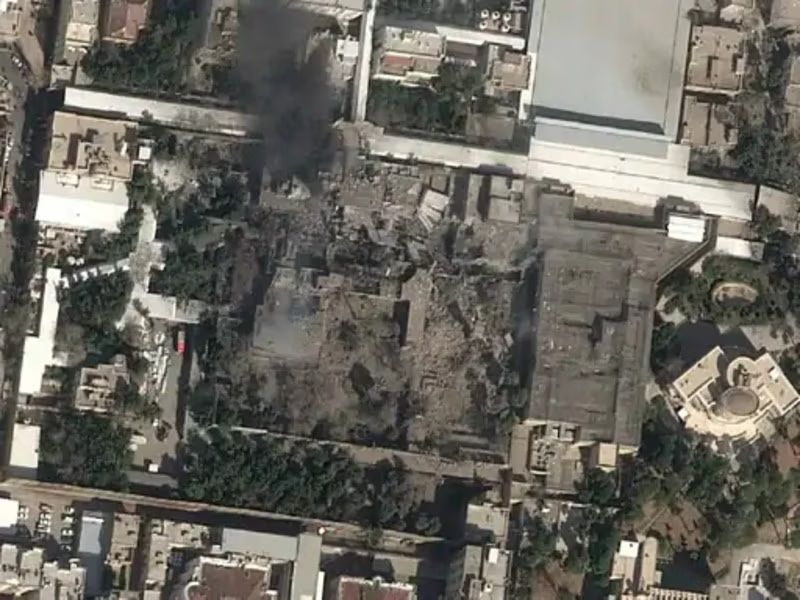
Regional security analysts warn that the vacuum created by Khamenei’s death could lead to both internal power consolidation efforts and external retaliation. Iran’s Revolutionary Guard Corps is expected to play a central role in maintaining stability and coordinating the state’s response.
International reaction has been swift, with diplomatic calls for restraint and urgent consultations expected at the United Nations. Several governments have expressed concern over the potential for rapid escalation and urged all parties to avoid further actions that could widen the confrontation.
Khamenei’s three decades in power shaped Iran’s regional posture, nuclear policy, and strategic alliances. His reported death marks not only a military escalation but also a pivotal political moment for Iran’s future direction. Whether the transition leads to continuity or internal realignment will be closely watched by governments, markets, and security agencies worldwide.