

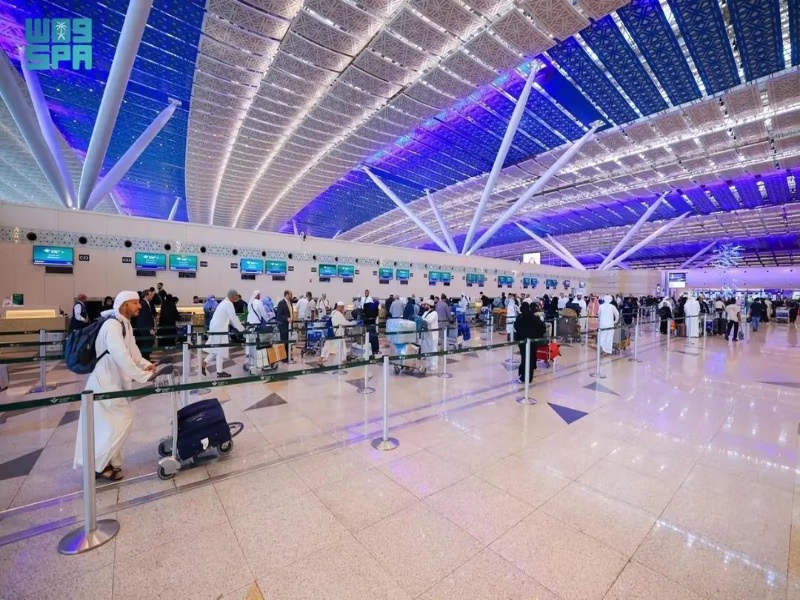
King Abdulaziz International Airport (KAIA) began 2026 on a positive note, handling about 5.45 million passengers in January, a 7.3 percent increase over the same month last year.
Flight movements increased 29,200, up to 11 percent, while total baggage throughput surged 8 percent to 6.6 million items. The airport had its busiest operational week between January 11 and 17, where 1.28 million travelers were served.
The airport recorded its highest number of passengers on January 17 with 195,300 passengers and 1,089 flights, the busiest day in its history, highlighting the effectiveness of its operation and the infrastructure’s ability to support increasing travel demand.
These findings indicate the continuous improvement of Jeddah Airports Co. in improving the passenger experience, increasing travel choices, and controlling the increase in air traffic as per the National Aviation Program and Saudi Vision 2030.
After its establishment in 2022, the company, referred to as JEDCO, has been overseeing the management and operations of KAIA, driving the implementation of the Aviation Program under the National Transport and Logistics Strategy.
The airport in 2025 had an all-time high passenger count of 53.4 million passengers, the most passengers in the history of an airport in Saudi Arabia, with the airport ranking among the global mega airports in terms of traffic.
The airport also processed 310,000 flights and 60.4 million bags, representing a 12 percent increase compared to 2024. It also processed 9.57 million containers of Zamzam water and 2,968 cargo flights.
This success indicates the qualitative change of the airport and its status as a regional hub as well as a national gateway linking the Kingdom to the world. It also underscores its contribution to the movement of visitors and pilgrims, furthering tourism as part of the objectives of Vision 2030, economic diversification, and offering a unique travel experience.
The January record at KAIA is just one among a larger success report of Saudi airports, with the statistics of 2025 values indicating the highest growth of air traffic in the Kingdom, out of regional averages, and establishing Saudi Arabia as one of the fastest-growing and most developed aviation markets in the world.
However, the number of passengers increased by 9.6 percent, driven by tourism, international events, and the growing global connectivity. This expansion was an indication of the capacity and the connectivity as Saudi airports received about 140.9 million passengers, including 76 million international and 65 million domestic passengers.
light movements increased 8.3 percent to approximately 980,400, which reflects the long-term recovery of the sector. KAIA served 38 percent of total passenger movement with an average daily capacity of 146,000 passengers and was operating at 107 percent of capacity.
King Khalid International Airport processed 29 percent of the number of passengers, and the daily average number was 112,000. Madinah and Dammam airports also experienced record highs, with 137 percent and 112 percent capacity utilization, respectively.