
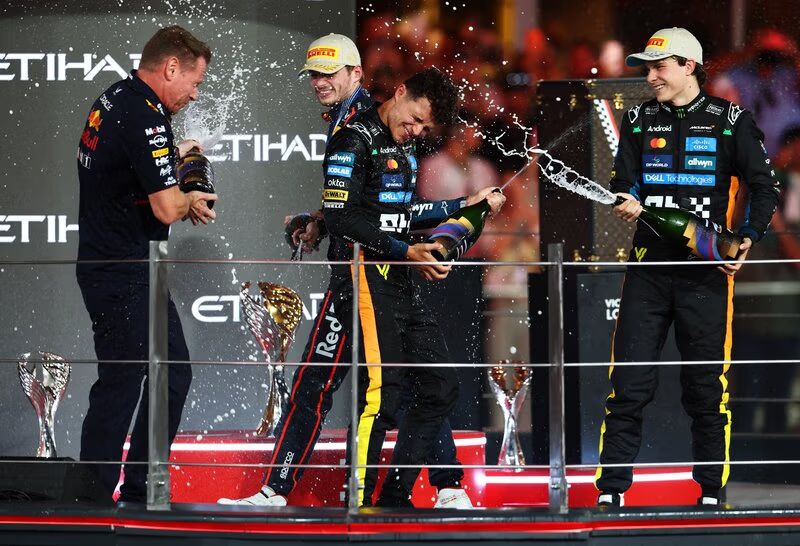
Abu Dhabi Grand Prix 2025 concluded with a landmark result for Formula One as Lando Norris secured his maiden world championship after finishing third at Yas Marina Circuit, while Max Verstappen won the race. The season finale delivered high sporting drama and reinforced the UAE’s position as a global motorsport destination with significant economic impact.
The Etihad Airways Abu Dhabi Grand Prix, the 24th and final round of the season, featured a three-way title battle between Norris, Verstappen, and Oscar Piastri. Norris’s podium finish brought his season total to 423 points, narrowly ahead of Verstappen on 421. Piastri, who finished second in the race, ended the year third in the standings with 410 points.
Verstappen Takes Race Victory, Norris Secures the Championship
Verstappen dominated the race from pole position, crossing the finish line 12.5 seconds ahead of Piastri. Despite the win, Verstappen fell short of the championship by two points, ending his streak of four consecutive world titles. For McLaren, the result completed a historic season in which the team also secured the Constructors’ Championship earlier in the year.

Norris becomes the 11th British driver to win an F1 world title, and McLaren’s first driver’s champion since Lewis Hamilton in 2008. His victory marks a turning point for the team, whose multi-year investment programme in technology, engineering, and talent yielded its strongest competitive run in more than a decade.
Economic and Commercial Impact for the UAE
The Abu Dhabi Grand Prix remains one of the most commercially influential events in the global F1 calendar. The weekend drew international visitors, VIP guests, and major corporate partners, contributing to hospitality, retail, and entertainment activity across the capital. As Yas Island continues to expand its reputation as a world-class sporting and lifestyle hub, the event provides a measurable boost to tourism and the UAE’s brand visibility.
Formula One’s strong regional following, combined with long-term hosting agreements, reinforces Abu Dhabi’s positioning within the global sports and entertainment economy. With increasing investor interest in motorsport and sports assets worldwide, the championship outcome also strengthens the commercial appeal of teams like McLaren, which now enters the 2026 season with elevated brand equity and sponsorship potential.
Season Dynamics and Competitive Outlook
The 2025 season demonstrated the grid’s increasing competitiveness, with Norris, Verstappen, and Piastri setting the benchmark through consistent podium finishes. Regulatory stability and substantial team investments played a decisive role in performance gaps. At the same time, the sport’s expanding global calendar increased commercial exposure across key markets in the Middle East, Asia, and North America.
As Formula One prepares for further technical changes and new commercial partnerships in 2026, teams are expected to intensify development programmes to capitalise on the sport’s rising global valuation and expanding audience base.
The Abu Dhabi finale reaffirmed that the championship is entering a new era defined by tighter competition, stronger team strategies, and deepening engagement across emerging markets, including the Gulf region.