
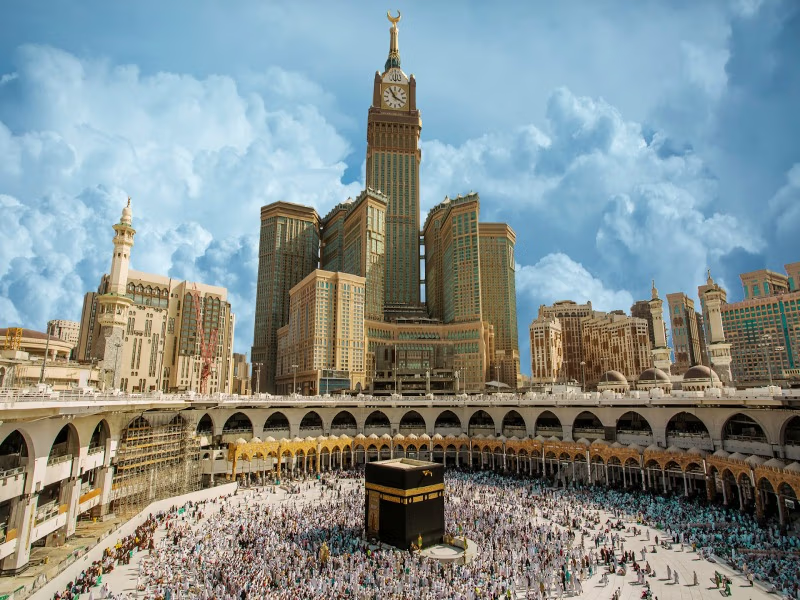
Makkah, the sacred city of Islam, is witnessing new levels of economic activity prior to Ramadan this year, with the markets, shopping centers, and hotels witnessing an influx of visitors due to the religious and economic importance of the city during the season.
The Saudi Press Agency surveyed the field and revealed that the retail and food industries have significantly increased, and there is a growing demand for staple goods, dates, Ramadan drinks, and hospitality and decor products.
Traditional markets and modern shopping complexes have been crowded by residents, expatriates, and visitors, supported by promotional offers unveiled by several businesses to attract consumers.
Early reservations in hotels and serviced apartments, especially in the central location in and around the Grand Mosque, have gone up in the hospitality industry, and the occupancy is bound to grow even further during the initial days of the holy month.
This influx is propelled by pilgrims and visitors who come to the Kingdom both internally and externally to carry out Umrah and prayers at the Grand Mosque.
Transport and logistics services have remained active, coupled with heightened arrangements by the concerned authorities to facilitate smooth traffic movements and easy access to worshippers.
However, health and regulatory requirements have also been enhanced to protect food safety and service quality. Ramadan has continued to be one of the most significant sales seasons of the year, offering a good variety in choices to different categories of consumers.
During this period annually, Makkah records a complete seasonal economic cycle that boosts small and medium-sized enterprises and increases commercial activity.
The Makkah Municipality has ensured that it has increased the inspection of markets and outlets of retailers within the holy city as part of its field plan to check on the adherence to health and municipal laws, product safety, and quality of services.
The municipality claimed that inspection teams have gone on extensive rounds at public markets, shopping centers, food outlets, industrial kitchens, and restaurants to ensure food quality, food storage practices, and hygiene standards, as well as to ensure that establishments comply with accepted rules and regulations.
Meanwhile, it provided that such surveillance campaigns are round-the-clock, especially at times when commerce is intensified. The municipal government also emphasized the need for citizens and residents to report any issues through official channels, and this enhanced community supervision and high standards of public health and safety, as Makkah is a destination for millions of worshipers both inside the Kingdom and outside.
This increasing economic movement underscores the energy of the Makkah market and its capacity to react to significant religious seasons, which further strengthens the city as a spiritually and economically dynamic hub and a world attraction site of Muslims during Ramadan.