
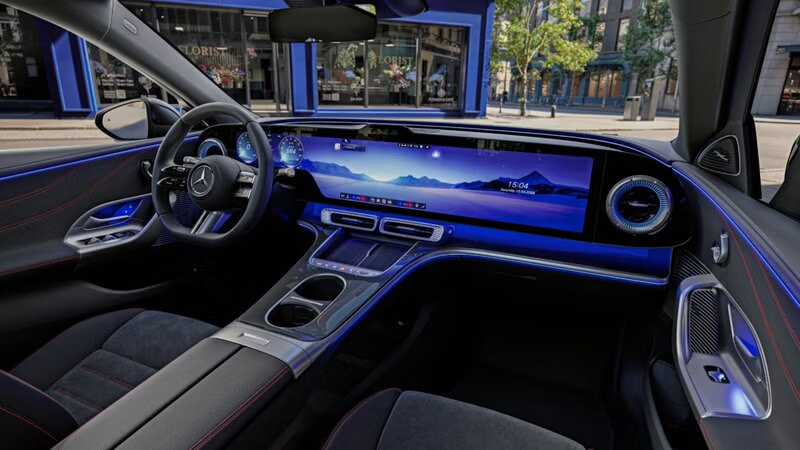
Mercedes-Benz is recalling approximately 144,000 vehicles in the United States due to a software issue that could cause the instrument panel display to go blank while the vehicle is in motion, according to the National Highway Traffic Safety Administration.
The recall affects 144,049 vehicles across several 2024 to 2026 model-year luxury models, including the AMG GT, C-Class, E-Class, SL, CLE, and GLC lineups.
According to the regulator, the issue is linked to the vehicle’s infotainment control unit, which manages navigation, multimedia, and display-related functions. The system may unexpectedly reset while driving, temporarily causing the instrument cluster display to shut off.
A blank instrument display could prevent drivers from viewing critical information such as speed, warning alerts, and vehicle status indicators, increasing the risk of accidents.
The NHTSA said Mercedes-Benz dealers will update the infotainment control unit software free of charge to resolve the issue.
The recall reflects the growing complexity of modern vehicles as automakers increasingly integrate software-driven systems, digital dashboards, and connected infotainment technologies into core vehicle operations.
Industry analysts say software-related recalls are becoming more common across the automotive industry as vehicles evolve into increasingly computer-dependent platforms.
Major manufacturers, including Tesla, Ford Motor Company, and General Motors, have also faced software-related recalls in recent years tied to infotainment systems, driver assistance technologies, and digital instrument clusters.
The issue also highlights the automotive industry’s broader transition toward software-defined vehicles, in which over-the-air updates and digital system management are becoming central to vehicle maintenance and safety.
Mercedes-Benz has not reported any injuries or accidents linked to the defect at this stage.
The German luxury automaker continues to invest heavily in digital vehicle architecture, artificial-intelligence integration, and connected driving technologies as competition intensifies in the premium automotive segment.