
The spotlight in Iran’s leadership transition has firmly shifted to Mojtaba Khamenei, as the Islamic Republic begins the formal process of selecting a successor to Ayatollah Ali Khamenei. With only one previous transfer of power in the country’s post-revolution history, the stakes surrounding Mojtaba Khamenei have rarely been higher.
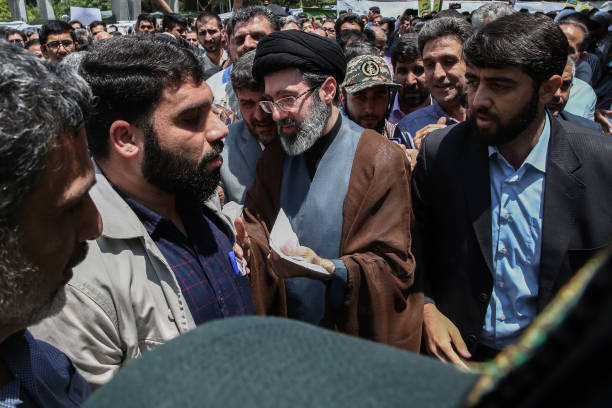
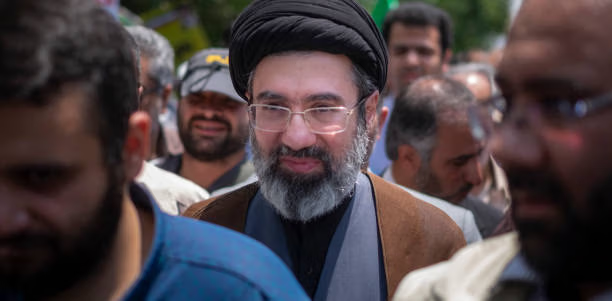
31 May 2019, Iran, Tehran: Mojtaba Khamenei, son of Iranian Supreme Leader Ayatollah Ali Khamenei, is pictured during a protest marking the annual al-Quds Day (Jerusalem Day) on the last Friday of the Muslim holy month of Ramadan.
Following the confirmation of the Supreme Leader’s death, authorities declared a 40-day mourning period and activated constitutional procedures. A temporary leadership council composed of the sitting president, the judiciary chief and a jurist appointed by the Guardian Council has assumed the duties of the Supreme Leader until a permanent replacement is chosen.
The decisive role now lies with the Assembly of Experts, an 88-member clerical body entrusted with selecting Iran’s highest authority. The Assembly operates largely out of public view, and its internal deliberations reflect consensus-building among senior religious and political figures. The last such decision came in 1989, when Ruhollah Khomeini died and Ali Khamenei was elevated to leadership.
In this new chapter, Mojtaba Khamenei has emerged as a central figure in succession discussions. Long regarded as influential within conservative power structures, he is widely seen as ideologically aligned with his father’s hardline policies. Reuters previously reported, citing individuals familiar with internal debates, that Mojtaba Khamenei has been viewed by some insiders as a logical successor capable of preserving institutional continuity.
Yet the path forward is complex. Mojtaba Khamenei does not hold the highest clerical rank traditionally associated with the office of Supreme Leader. Moreover, a direct father-to-son transition could trigger criticism in a system founded on revolutionary opposition to monarchy. While Iran’s constitution does not explicitly prohibit such a succession, the optics of hereditary transfer remain sensitive among parts of the clerical establishment.
Another name circulating in political circles is Hassan Khomeini, grandson of the republic’s founding leader. Hassan Khomeini carries symbolic weight due to his lineage and is often perceived as projecting a comparatively measured tone. His candidacy, however, would still require broad support within the Assembly of Experts and other influential institutions.
The Islamic Revolutionary Guard Corps is expected to play a decisive role in shaping the outcome. Over decades, the Guard has expanded its influence across military, economic and political spheres. Any leadership transition that seeks stability will likely depend on alignment between clerical authority and the security establishment.
International attention has also intensified around Mojtaba Khamenei. Donald Trump, commenting on the succession process, said there were “some good candidates” but declined to specify names, telling CBS News, “I know exactly who, but I can’t tell you.” The remarks underscored the broader geopolitical implications of Iran’s leadership choice.
The Supreme Leader’s authority extends far beyond ceremonial leadership. The office commands the armed forces, influences nuclear policy, oversees the judiciary and sets the strategic direction of the Islamic Republic. Whoever succeeds Ali Khamenei will shape Iran’s domestic trajectory and its posture toward the West, regional rivals and global powers.
For now, Mojtaba Khamenei remains at the center of speculation. Whether he secures the backing of senior clerics and key power brokers will determine not only his political future, but also the direction Iran takes in one of the most consequential transitions since 1979.