

Oilprice.com describes Murban crude as having evolved into a major global benchmark, with its price relationship to West Texas Intermediate (WTI) tightening as demand for Murban rises amid shifts in Middle Eastern supply.
Produced by ADNOC in Abu Dhabi, Murban is a light, sweet crude featuring 0.78% sulphur and an API gravity of 39.9 degrees.
Murban has gained significant traction, becoming one of the most prominent and frequently delivered grades within the Platts Dubai benchmark basket.
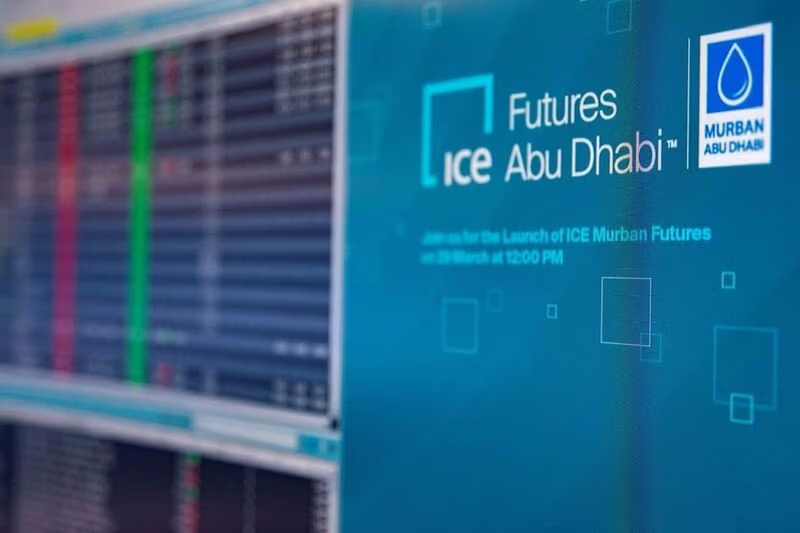
Abu Dhabi launched IFAD (ICE Futures Abu Dhabi) in 2021, introducing its flagship physically delivered Murban futures contract. Trading activity surged in 2024, breaking records throughout the year. In the second quarter alone, volumes reached 1.5 billion barrels more than double the pace at the start of 2024. June delivered new highs as well, averaging 31 million barrels traded per day and hitting a single-day peak of 57,300 contracts (57.3 million barrels). The momentum underscores Murban’s transformation from a niche Gulf crude into a globally relevant benchmark.
As Abu Dhabi boosts Murban supply and IFAD trading adds market depth, the grade has outgrown its regional role. Its pricing gap with WTI has narrowed, bringing the two into closer competition in Asian refineries that once turned to U.S. barrels when economics favored them.
This marks a meaningful shift: Murban is gaining the liquidity and transparency essential for any benchmark, while WTI’s presence in Asia continues to be shaped by freight costs, arbitrage dynamics, and U.S. Gulf Coast supply flows.
The converging Murban–WTI pricing relationship reflects strengthening demand for Middle Eastern crudes—particularly Murban and the impact of ADNOC diverting more barrels to its domestic refinery, prompting Asian buyers to consider alternatives.
(Inputs from WAM)