
Oil prices edged lower on Monday after Donald Trump said the United States would begin assisting vessels stranded in the Strait of Hormuz, potentially easing immediate supply bottlenecks.
Despite the move, markets remained firmly supported above the $ 100-per-barrel mark, reflecting persistent uncertainty about global supply flows and the absence of a broader resolution to ongoing geopolitical tensions.
Brent crude futures slipped marginally by 0.1 percent to $108.11 a barrel, while US West Texas Intermediate (WTI) fell 0.4 percent to $101.50 a barrel in early trading. The declines followed sharper losses in the previous session but pointed to a market still underpinned by tight supply conditions.
A Singapore-based commodities strategist said the market reaction reflects short-term relief rather than a structural shift. “The announcement provides some immediate reassurance on shipping flows, but underlying supply constraints remain unresolved, which is why prices are holding above $100,” the strategist noted.
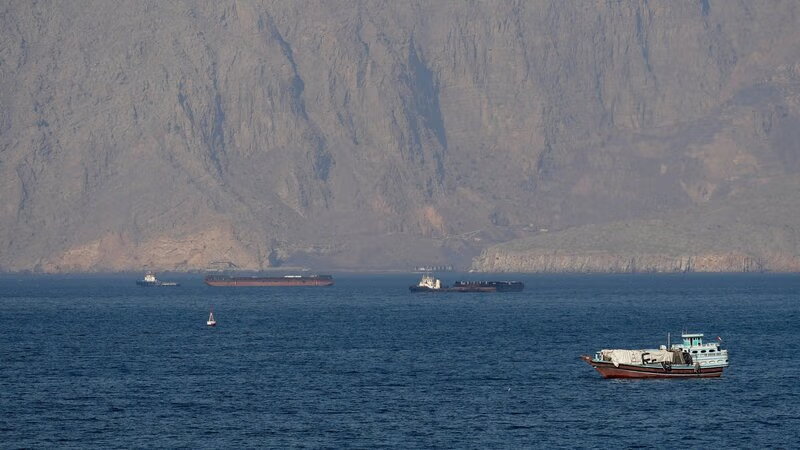
The Strait of Hormuz, a critical chokepoint for global oil shipments, continues to operate under constraints, limiting the movement of crude exports from key producing regions. While Washington’s efforts to guide ships through the waterway may ease short-term disruptions, traders remain cautious about the pace at which normal flows can resume.
Diplomatic engagement between the United States and Iran is ongoing, with both sides assessing potential responses. However, no definitive agreement has emerged, leaving markets sensitive to any developments that could impact supply stability.
At the same time, OPEC+ has maintained its gradual approach to output adjustments. The group recently agreed to raise production targets by 188,000 barrels per day for June, marking the third consecutive monthly increase.
Analysts note that the additional supply is unlikely to have an immediate effect, as logistical constraints continue to limit actual export volumes. As a result, the market remains influenced more by physical supply disruptions than by nominal production targets.
For global energy markets, including the Middle East, the situation highlights the delicate balance between supply management and geopolitical developments. Elevated oil prices continue to feed into inflation expectations, with potential knock-on effects across transport, manufacturing, and broader economic activity.
As negotiations continue and shipping conditions evolve, oil markets are expected to remain volatile, with price direction closely tied to developments around supply routes and diplomatic progress.