

PepsiCo’s Q1 2026 results reflect a turnaround driven by pricing strategy and product refreshes, as the company topped market expectations while warning of rising cost pressures linked to geopolitical tensions.
The company reported first-quarter revenue of $19.44 billion, up 8.5 percent year-on-year and ahead of estimates of $18.94 billion. Adjusted earnings per share came in at $1.61, also beating forecasts of $1.55.
Performance was supported by a shift toward affordability, particularly in North America, where PepsiCo reduced prices by up to 15 percent on key snack brands such as Lay’s and Doritos earlier this year. The move helped revive volumes in its North America foods division, which returned to growth after a prolonged slowdown.
The division recorded a 2 percent increase in volumes during the quarter, reversing a 1 percent decline in the previous quarter. The improvement suggests that price adjustments are beginning to win back consumers who had shifted to cheaper alternatives or reduced discretionary spending.
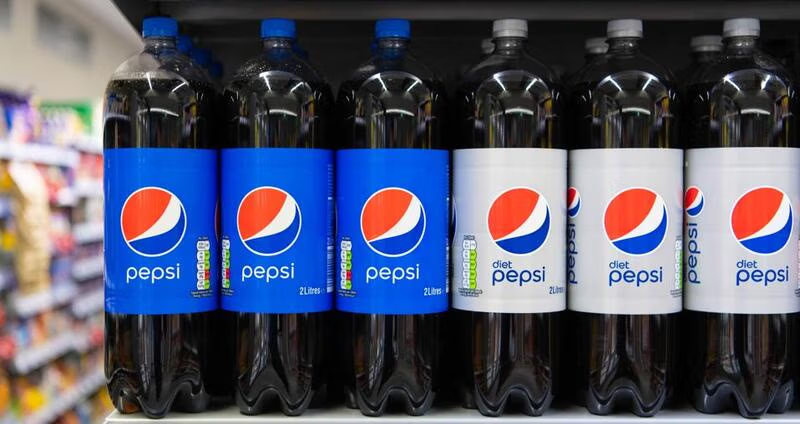
At the same time, demand for diet and lower-sugar beverages remained resilient, supporting overall performance in the company’s drinks segment, even as volumes in North America beverages declined 2.5 percent.
“The results offer early proof that price cuts and innovation are working,” analysts noted, pointing to improving top-line momentum despite ongoing macroeconomic challenges.
PepsiCo has also been restructuring its operations to improve efficiency, including streamlining product lines and optimizing its supply chain. The effort comes amid pressure from activist investor Elliott Management to enhance margins and operational discipline.
However, the company flagged growing risks tied to global developments, particularly rising input costs linked to the ongoing conflict in the Middle East.
“As we look ahead, the macroeconomic environment has become more volatile and uncertain because of ongoing geopolitical conflicts,” said CFO Steve Schmitt.
Higher energy prices and rising costs of raw materials, such as PET resin used in beverage packaging, are expected to weigh on margins. While PepsiCo typically hedges these inputs for nine to twelve months, executives indicated that sustained cost pressures could eventually require pricing adjustments.
Importantly, the company signaled that further price hikes would be a last resort, as it prioritizes maintaining affordability for consumers facing higher living costs.
PepsiCo reaffirmed its full-year outlook, expecting organic revenue growth of 2 percent to 4 percent and core constant currency earnings per share growth of 4 percent to 6 percent.
The company is also continuing to refresh its product portfolio, including updates to its Gatorade lineup with new lower-sugar variants, aligning with shifting consumer preferences toward healthier options and the growing influence of weight-loss trends.
Shares of PepsiCo rose about 1 percent in early trading following the results, reflecting investor confidence in the company’s ability to balance pricing, demand, and cost pressures.
The results underscore a broader theme across the consumer goods sector, where companies are increasingly relying on a mix of affordability, innovation, and operational efficiency to navigate a challenging economic environment.