India’s central bank has launched one of its most aggressive currency interventions in over a decade, tightening controls on a $149 billion-a-day derivatives market to curb speculative pressure on the rupee and restore stability.
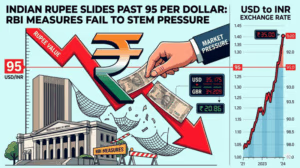
The Reserve Bank of India moved to close loopholes in foreign exchange trading after earlier measures failed to prevent a sharp decline in the currency. The rupee, which had weakened significantly in March, has since shown signs of recovery, strengthening to around 93.5 against the U.S. dollar following the latest round of interventions.
At the core of the crackdown is the restriction of non-deliverable forward (NDF) contracts, a key instrument used by traders to speculate on currency movements. The RBI has barred banks from offering such contracts to clients and imposed tighter conditions on derivative transactions, requiring proof of genuine hedging needs rather than speculative intent.
The move comes after an earlier attempt to stabilize the rupee backfired. By capping banks’ open currency positions, the RBI inadvertently created arbitrage opportunities between onshore and offshore markets, allowing corporates and traders to exploit pricing differences and intensify downward pressure on the currency.
Recognizing the unintended consequences, the central bank responded with a more comprehensive framework to eliminate speculative cycles. New rules also prohibit the rebooking of canceled forward contracts, a practice that had enabled repeated profit-taking without underlying exposure.
The crackdown is already showing early results. By tightening access to derivative markets and reducing arbitrage flows, the RBI has helped restore confidence and limit volatility in the rupee. Analysts note that the measures effectively target “basis trades,” where traders exploit differences between domestic and offshore currency pricing.
However, the intervention is not without cost. Indian banks are now being forced to unwind tens of billions of dollars in previously profitable positions, raising concerns about potential losses and reduced liquidity in currency markets.
More broadly, the RBI’s actions highlight the growing complexity of managing currency stability in an interconnected financial system. While speculative activity has been curtailed, underlying pressures, including elevated oil prices and uneven capital flows, continue to pose risks to the rupee’s longer-term trajectory.
For policymakers, the episode underscores a key challenge: balancing market efficiency with stability. For investors, it signals a shift toward tighter oversight in India’s currency markets, with implications for both trading strategies and capital flows in the months ahead.