

India’s summer is arriving with familiar intensity. Temperatures in several regions are expected to cross 45°C, driving a surge in demand for drinking water and cold beverages. This year, however, the seasonal spike is colliding with a global energy shock, creating upward pressure on the cost of everyday essentials such as bottled water and beer.
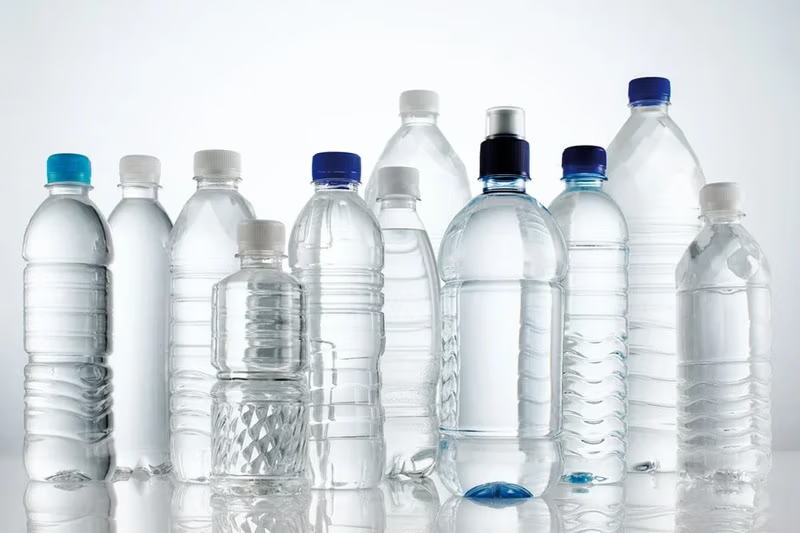
At the center of the issue is a supply chain that begins far from India’s retail shelves. Bottled water, widely consumed across urban and semi-urban areas, depends heavily on plastic packaging made from polyethylene terephthalate, or PET, a petroleum-derived material. As crude oil prices rise, so do the costs of producing these bottles.
In recent weeks, the price of PET preforms, the intermediate inputs used to manufacture plastic bottles, has risen sharply, squeezing producers’ margins. Manufacturers say the rise has been significant enough to disrupt supply, with some facilities scaling back operations even as demand climbs.
The trigger for the energy shock lies in global markets. Disruptions to shipping routes in the Middle East, particularly around the Strait of Hormuz, have pushed oil prices higher. For India, which relies heavily on imported crude, the effect is immediate. Higher energy costs feed into packaging, transportation, and production, amplifying pressure across industries.
The bottled water sector, valued at roughly $6 billion, is particularly exposed. Demand peaks during April and May, when extreme heat drives consumption higher and access to reliable drinking water remains uneven. While some companies have already raised prices, many have absorbed the increase so far to remain competitive. Industry executives say that strategy may not be sustainable if input costs continue to climb.
The pressure extends beyond water. India’s beer industry is facing a parallel challenge, this time driven by the cost of glass packaging. Glass manufacturing depends on energy-intensive furnaces powered largely by natural gas. With domestic gas supply tightening and global prices elevated, production costs have risen, pushing glass bottle prices higher.
Brewers, operating in a tightly regulated pricing environment, have begun seeking approvals from state authorities to increase retail prices. Without such adjustments, companies risk margin compression at a time when demand would typically strengthen.
For now, the impact on consumers has been limited. Basic bottled water prices remain largely unchanged, and beer price revisions are still under consideration. But the underlying economic point in one direction. As companies exhaust their ability to absorb higher costs, price increases are likely to become more visible.
The episode underscores how closely linked everyday consumption in India has become to global forces. A disruption in energy markets can quickly translate into higher costs for basic goods, particularly in sectors where inputs are tied to oil and gas.
It also highlights a structural vulnerability. With millions of households dependent on bottled water due to gaps in public infrastructure, even modest price increases can carry broader implications for affordability.
As the summer intensifies, the interplay between extreme weather and global energy volatility is likely to shape not only demand but also the price consumers pay for essentials that, in ordinary times, remain largely taken for granted.