

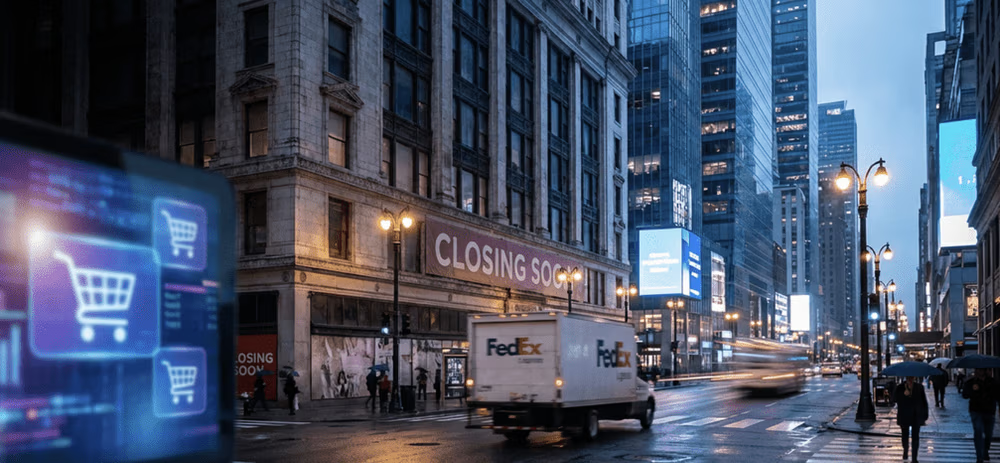
For decades, America’s biggest department stores defined how consumers shopped. Today, many of those once-iconic names are disappearing, one bankruptcy filing at a time.
Saks Global became the latest casualty late Tuesday, filing for bankruptcy protection as intense competition from e-commerce and big-box retailers continues to reshape the U.S. retail landscape. The filing places the luxury department store operator among a growing list of high-profile retailers that have collapsed over the past decade, underscoring the brutal economics of modern retail.
A Luxury Giant Overwhelmed by Structural Shifts
Saks Global was formed after Hudson’s Bay Company acquired rival Neiman Marcus in 2024, creating a luxury department store conglomerate that included Saks Fifth Avenue, Neiman Marcus, and Bergdorf Goodman. The strategy was to consolidate scale, strengthen bargaining power with brands, and lure shoppers back to physical stores.
Instead, the combined company struggled under mounting pressure.
Like many legacy retailers, Saks Global faced shrinking foot traffic, rising operating costs, and consumers increasingly bypassing department stores altogether. Luxury brands, from fashion houses to jewelry labels, have aggressively pushed into direct-to-consumer sales, cutting out traditional retail middlemen and eroding the relevance of department stores.
According to industry analysts cited by CNBC and Reuters, department stores have been among the hardest-hit segments of U.S. retail, squeezed between fast-growing online platforms and large-format chains with deeper pricing power.
Competition That Legacy Retail Couldn’t Outrun
The problems facing Saks Global are not unique. Over the past decade, dozens of once-dominant US retailers have sought bankruptcy protection, many citing intense competition, declining sales, and shifting consumer behavior.
The COVID-19 pandemic accelerated these trends, but experts say the underlying issues predate the crisis. Online shopping adoption, rising logistics costs, and changing consumer expectations around price and convenience have fundamentally altered the retail equation.
A recent Deloitte retail outlook noted that even high-income consumers, once considered resilient, have grown more selective, favoring experiences or buying directly from brands rather than through department stores.
A Decade of Retail Bankruptcies
Saks Global now joins a long list of major retailers that have filed for bankruptcy over the past decade:
- Sears (October 2018): Sears and Kmart’s parent company sought Chapter 11 protection after years of revenue declines and store closures.
- Barneys New York (August 2019): The iconic retailer filed for bankruptcy, with its brands later sold to Authentic Brands Group.
- Neiman Marcus (May 2020): The luxury chain entered bankruptcy protection and completed its Chapter 11 process later that year.
- J.C. Penney (May 2020): Filed for bankruptcy protection before its assets were acquired by Simon Property Group and Brookfield Asset Management.
- Lord & Taylor (August 2020): The storied department store filed for Chapter 11 during the coronavirus outbreak.
- Party City (December 2024): Filed for Chapter 11 for the second time in two years following prolonged pandemic-era struggles.
- Joann Fabrics (January 2025): Entered Chapter 11 for the second time in under a year, citing inventory shortages.
- Rite Aid (May 2025): Filed for bankruptcy again after an earlier restructuring failed to resolve long-term challenges.
- Claire’s (August 2025): Filed for bankruptcy protection for the second time, planning widespread store closures and a search for buyers.
Why Bankruptcy Keeps Returning to Retail
Analysts say these repeat bankruptcies highlight a deeper problem: restructuring alone often cannot fix outdated business models.
Even after debt reductions, retailers face rising labor costs, expensive leases, complex supply chains, and relentless price competition from online players like Amazon and direct-to-consumer brands. According to data from the National Retail Federation, US store closures have consistently outpaced openings in recent years, particularly in apparel and department stores.
For luxury retailers, the challenge is even sharper. Consumers increasingly question higher prices amid quality concerns, while brands themselves prefer selling directly to protect margins and customer data.
What Saks Global’s Filing Signals for the Industry
Saks Global’s bankruptcy marks another warning sign for traditional department stores trying to survive in a radically transformed retail economy. While bankruptcy can offer breathing room, history shows that it rarely guarantees long-term survival without a fundamental rethink of how, and where, consumers shop.
As competition intensifies and consumer habits continue to evolve, the collapse of legacy retail giants appears less like a cycle, and more like a structural reset of American retail itself.