

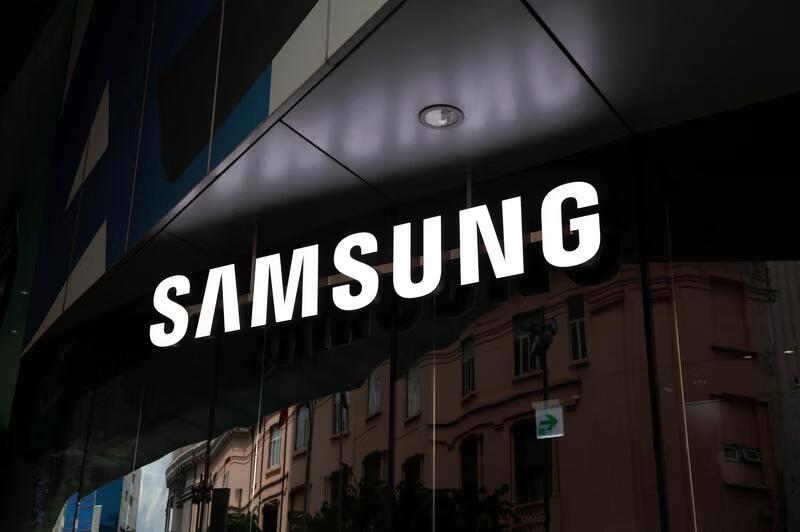
Samsung Electronics has crossed the $1 trillion market-cap milestone, becoming only the second Asian company, after Taiwan Semiconductor Manufacturing Company, to do so, as surging global demand for artificial intelligence chips continues to reshape the semiconductor industry.
The milestone came after Samsung shares surged as much as 11 percent in early trading on Wednesday, extending a powerful rally that has seen the stock more than quadruple over the past year. The gains also pushed South Korea’s benchmark Kospi index above the 7,000 mark for the first time.
The rally reflects growing investor confidence in companies positioned at the center of the global AI infrastructure buildout. Alongside TSMC and SK Hynix, Samsung has emerged as a key supplier of advanced memory chips used in AI data centers and high-performance computing systems.
Demand for high-bandwidth memory and advanced semiconductor products has accelerated sharply as global technology companies expand investments in generative AI, cloud computing, and data infrastructure.
Samsung’s semiconductor division recently reported record quarterly profits, driven largely by strong AI-related demand and tight supply conditions in the memory market. Analysts expect the momentum to continue over the coming quarters as NAND and DRAM chip prices remain elevated.
The company’s valuation surge also reflects a broader shift in investor perception around the semiconductor sector. Market participants increasingly view AI-related chip demand as structural rather than cyclical, supporting longer-term earnings growth expectations for major semiconductor producers.
The boom has transformed South Korea into one of the world’s strongest-performing equity markets this year, with Samsung and SK Hynix accounting for a substantial share of the Kospi’s gains. Foreign institutional investors have also returned aggressively to Korean equities amid optimism around AI-led growth.
Despite the rally, Samsung continues to face challenges in other business segments, including smartphones and display panels, where rising input costs and softer consumer demand have weighed on profitability. The company is also navigating labor tensions, with workers reportedly threatening to strike over compensation tied to the chip division’s strong performance.
Still, analysts remain broadly optimistic about Samsung’s outlook, citing tight supply conditions and sustained global investment in AI infrastructure.
The development further highlights Asia’s growing dominance in the global semiconductor supply chain, as regional technology giants increasingly become central to the next phase of AI expansion.