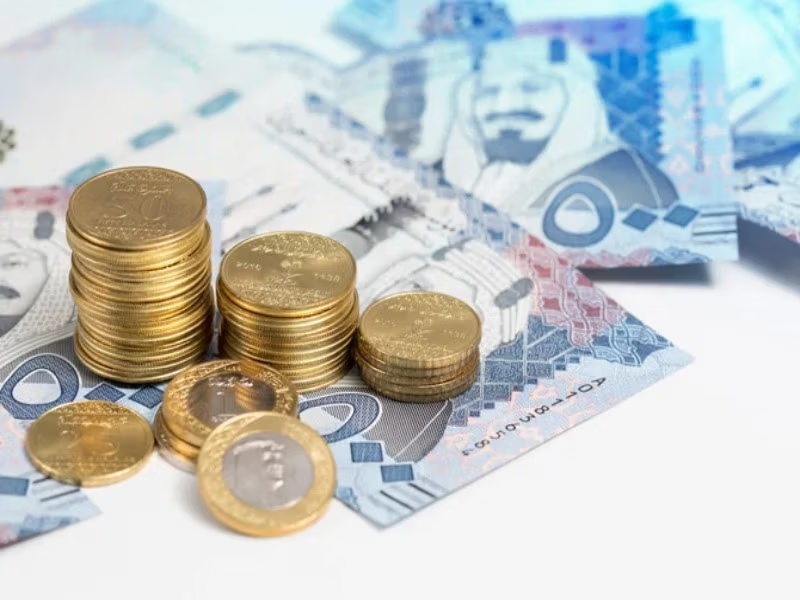
Official data stated that the capital spending of Saudi Arabia increased 18 percent year-on-year in the fourth quarter of 2025, while higher total expenditure widened the Kingdom’s budget deficit to SR94.85 billion ($25.28 billion).
Ministry of Finance’s Quarterly Budget Performance Report indicated that the government spending surged to SR371.6 billion in the three months to December, above 3 percent from SR360.5 billion in the same period in the previous year.
Capital spending, which is categorized under spending on non-financial assets, rose to SR50.9 billion in the fourth quarter compared to SR43.1 billion the previous year, reflecting continued investment in infrastructure and development projects.
The total revenues stood at SR276.7 billion in the quarter, as compared to SR269.9 billion in the third quarter, yet it shows a fall of approximately 9 percent compared to a year before because the oil revenues were lower.
In the fourth quarter, oil revenues amounted to SR154.2 billion, which declined by 10 percent compared to the previous year, but quarterly growth was aided by an increase in production. Oil revenues dropped by approximately 20 percent to SR606.5 billion in 2024 compared with SR756.6 billion in the previous year.
The non-oil revenues, which are one of the most important components of Saudi Arabian diversification strategy, reached SR122.6 billion during the fourth quarter.
The non-oil revenues increased by 1 percent to SR505.3 billion in 2025 as compared to the same year last year, which stood at SR502.5 billion on an annual basis.
Saudi Arabia continued to keep an expansionary fiscal policy in 2025, where total government spending amounted to SR1.39 trillion, increasing 1 percent from the previous year’s spending of SR1.37 trillion in 2024.
The Saudi spending grew in multiple areas of priority. Spending on education experienced an increase of 4 percent to SR212.5 billion, and health and social development spending increased by 2 percent to SR278.9 billion.
The spending in the military and security sector increased by approximately 5 percent to SR249.1 billion, and the expenditure in the public administration by 7 percent. Spending on general items increased 3 percent, and regional administration outlays increased marginally by 0.4 percent.
During the full fiscal year, total revenues reached SR1.11 trillion against expenditure of SR1.388 trillion, resulting in a budget deficit of SR276.6 billion, exceeding earlier government projections as oil revenues declined.
Public debt soared to SR1.52 trillion at the end of 2025, compared with SR1.22 trillion in the previous year, as the Kingdom surged borrowing to finance fiscal gaps while continuing to fund large-scale development and infrastructure projects.