

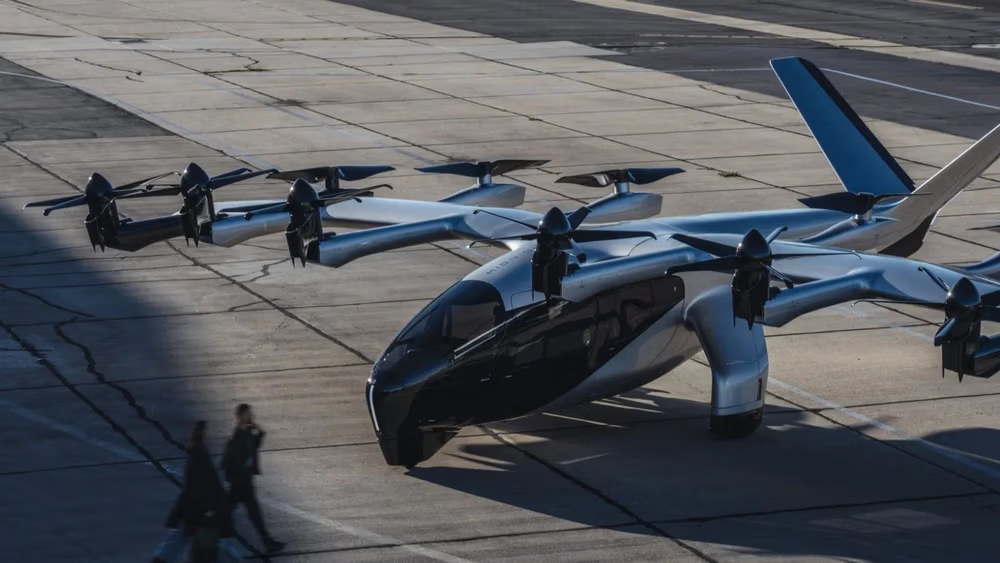
Saudi Arabia has taken a significant step toward deploying urban air taxi services after entering into a strategic partnership with a US-based advanced aviation company, signalling the Kingdom’s intent to integrate next-generation air mobility into its urban transport network.
The collaboration focuses on laying the regulatory, operational, and safety groundwork to introduce electric vertical take-off and landing aircraft (eVTOLs) for short-distance city travel. The initiative is aligned with Saudi Arabia’s broader efforts to modernise infrastructure, improve mobility efficiency, and position itself as a regional leader in advanced transportation technologies.
Building the Framework for Advanced Air Mobility
Under the partnership, Saudi aviation authorities will work alongside the US firm to develop certification pathways, safety standards, airspace integration protocols, and operational guidelines. These steps are essential before commercial air taxi services can be deployed in densely populated urban environments.
The project is expected to include pilot programmes, test flights, and feasibility assessments across key cities, with a strong emphasis on international aviation standards. By aligning with global regulatory benchmarks, Saudi Arabia aims to ensure that any future air taxi operations meet the highest safety and performance requirements.
Strategic Fit With Vision 2030
Urban air mobility forms part of Saudi Arabia’s broader Vision 2030 agenda, which prioritises innovation, sustainability, and economic diversification. Electric air taxis have the potential to reduce congestion, shorten travel times, and support tourism growth, particularly in major urban centres and emerging destinations.
The initiative also supports the Kingdom’s ambition to attract advanced technology investment and develop new high-value sectors within aerospace, smart mobility, and clean transport. As cities expand and demand for efficient movement increases, air taxis are being explored globally as a complementary layer to existing road and rail networks.
Regional Momentum in Air Taxi Development
Saudi Arabia’s move comes amid growing interest in urban air mobility across the Gulf. Governments in the region are actively evaluating eVTOL aircraft for future transport ecosystems, driven by rapid urbanisation, strong investment capacity, and supportive regulatory environments.
By partnering early with an experienced US technology provider, Saudi Arabia is positioning itself as one of the first adopters of commercial air taxi services in the Middle East. The focus on regulation and infrastructure suggests a measured approach aimed at long-term viability rather than rapid deployment.
Commercial and Investment Implications
For global aerospace and technology firms, Saudi Arabia’s engagement in urban air mobility signals expanding opportunities in aircraft manufacturing, software systems, air traffic management, and ground infrastructure such as vertiports and maintenance hubs.
From an investment perspective, the development of air taxi services could unlock new business models spanning passenger transport, logistics, and tourism. It also reinforces the Kingdom’s appeal as a testbed for emerging technologies, backed by large-scale public- and private-sector support.
What Comes Next
While no commercial launch timeline has been confirmed, the partnership marks an important early milestone. The subsequent phases are expected to focus on regulatory approvals, demonstration flights, and public engagement to assess readiness and acceptance.
As global cities prepare for a future in which air mobility complements traditional transport, Saudi Arabia’s latest move underscores the Kingdom’s position at the forefront of regional transport innovation.