
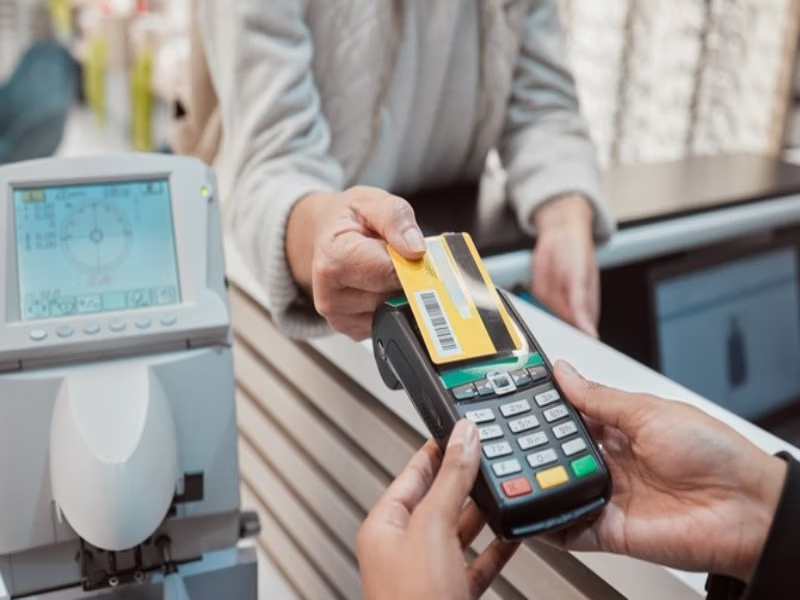
The total point-of-sale transactions in Saudi Arabia stood at SR16.10 billion ($4.29 billion) in the week ending on February 7, with all sectors recording positive changes in terms of weekly transactions.
The latest data from the Saudi Central Bank reported that the total value of POS transactions improved by 0.7 percent week-on-week, while the number of transactions increased 2.9 percent to SR256.15 million.
The spending on freight transportation and courier services was the highest and increased 9.5 percent to SR68.3 million. Furniture and home supplies increased by 9 percent to SR658.28 million.
Personal care spending decreased by 3.5 percent, and books and stationery spending was reduced by 7.7 percent. Hotel outlays increased by 4 percent to SR392.35 million.
However, the spending in pharmacies and medical supplies reduced 6 percent to SR243.77 million, and medical services grew 5.7 percent to SR544.83 million.
Food and beverages increased 3 percent to SR2.69 billion, which constituted the highest proportion of total POS expenditure. Restaurants and cafes came next with an increase of 0.2 percent to SR1.82 billion. Apparel and clothing expanded 3.1 percent to SR 1.38 billion, which is the third-largest portion in the observed week.
Therefore, the urban spending trends broadly reflected national patterns. Riyadh that contributed the highest percentage of the total POS expenditure, was up at 1.2 percent of SR5.51 billion, as compared to SR5.44 billion the week before.
The capital transactions were at 81.3 million, an increase of 3.4 percent per week. Transaction values were shown to rise 2.1 percent to SR2.22 billion in Jeddah, whereas Dammam registered a 1.4 percent rise to SR771.76 million.
The POS data, which is monitored by the SAMA on a weekly basis, is a sign of consumer spending trends and further development of digital payments in Saudi Arabia.
The numbers also point to the growing penetration of POS infrastructure outside of large retail centers into smaller cities and service industries, which contributes to larger digital inclusion programs.
The emergence of digital payment technologies fits the Saudi Arabia Vision 2030 goals to support electronic payments and the development of the Kingdom’s digital economy.