

The Indian stock market opened on a stronger note today, with benchmark indices recovering from recent losses, supported by positive global cues and value buying across several sectors. The BSE Sensex rose about 520 points, or roughly 0.66%, to around 79,636 in early trade, while the Nifty 50 climbed nearly 140 points, or 0.57%, to about 24,620, snapping a three-session losing streak that had been triggered by escalating geopolitical tensions in the Middle East.
Sectorally, metal stocks emerged as the top performers with the Nifty Metal index gaining more than 3%, followed by oil and gas, pharma, realty, and banking shares. However, the IT sector continued to face selling pressure, with the Nifty IT index declining by over 1% during early trading. FMCG stocks also remained slightly weaker compared with the broader market.
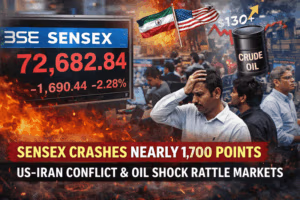
The rebound came after Indian equities witnessed sharp selling over the previous sessions as concerns over the ongoing conflict involving the United States, Israel, and Iran rattled investor sentiment globally. Rising crude oil prices and fears of prolonged geopolitical instability had triggered risk aversion among investors, leading to broad-based declines across major sectors earlier in the week.
Global cues offered some relief to markets on Thursday. Asian stocks advanced after gains on Wall Street overnight, where technology shares lifted major US indices. Investors are cautiously optimistic that diplomatic efforts could eventually ease tensions in the Middle East, although uncertainty remains elevated.
Commodity markets also reflected the geopolitical backdrop. Gold prices rose on the Multi-Commodity Exchange (MCX) amid rising safe-haven demand amid the conflict. MCX gold futures for April delivery traded above ₹1.63 lakh per 10 grams after rising by more than 1%, while silver futures climbed nearly 2% to around ₹2.70 lakh per kilogram.
Meanwhile, oil prices remained firm due to concerns about potential supply disruptions in the Middle East, with Brent crude trading above $83 per barrel and US West Texas Intermediate futures near $76.60 per barrel. Higher crude prices continue to be closely monitored by investors because of their potential impact on inflation, currency stability, and corporate profitability in oil-importing economies like India.
Market strategists caution that volatility is likely to persist as geopolitical developments and global macroeconomic signals continue to influence risk appetite. While the current rebound reflects bargain hunting after a steep selloff, analysts say the broader trend could remain fragile until there is greater clarity on the trajectory of the Middle East conflict and energy prices.