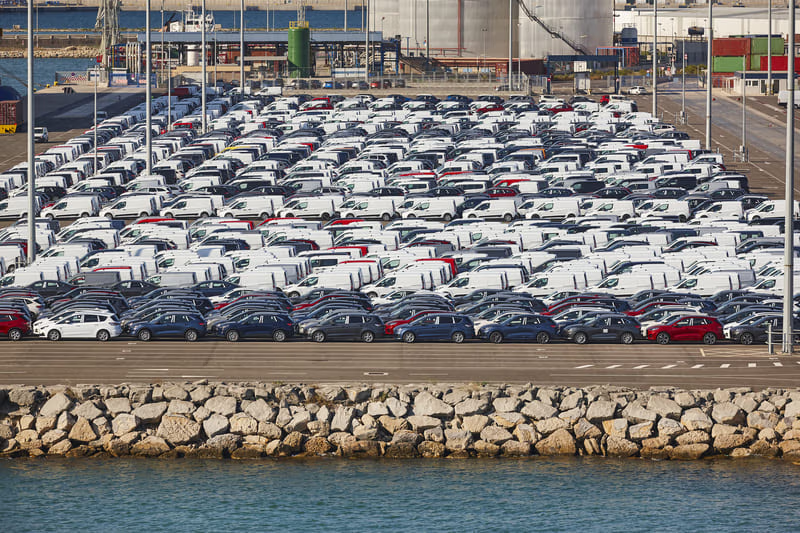
Donald Trump has announced plans to raise tariffs on cars and trucks imported from the European Union to 25 percent, signalling a fresh escalation in transatlantic trade tensions.
The proposed increase, expected to take effect as early as next week, comes amid accusations from Washington that the EU has failed to comply with the terms of an existing trade agreement.
“Due to the European Union’s non-compliance with our trade agreement, I will raise, next week, the tariffs imposed on EU exports of cars and trucks to the United States,” Trump said.
The decision targets one of Europe’s most significant export sectors. Automobiles account for a substantial share of EU shipments to the US, with major manufacturers in Germany, France, and Italy heavily reliant on the American market. A 25 percent tariff could materially impact pricing, demand, and profitability across the industry.
For US consumers, the move could translate into higher prices for imported vehicles, particularly in the premium and luxury segments where European brands dominate. Supply chains may also face disruption, as many automakers operate globally integrated production networks.
The announcement adds to a broader pattern of protectionist trade measures aimed at reshaping global supply chains and boosting domestic manufacturing. However, such actions often carry the risk of retaliation. The European Union could respond with countermeasures targeting US exports, potentially widening the scope of the dispute.
For global markets, including the UAE and wider Middle East, the implications are indirect but meaningful. The region’s automotive sector, which relies heavily on imports from both Europe and the US, could see pricing adjustments and shifts in supply dynamics if trade tensions persist.
More broadly, the move underscores the fragility of international trade relationships at a time when economic growth remains uneven. Heightened tariffs can dampen cross-border investment and create uncertainty for multinational businesses navigating complex regulatory environments.
As the implementation timeline approaches, attention will turn to how European policymakers respond and whether negotiations can prevent a full-scale trade escalation.