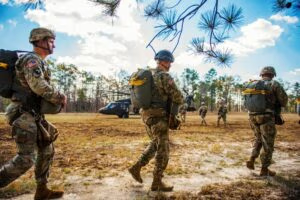

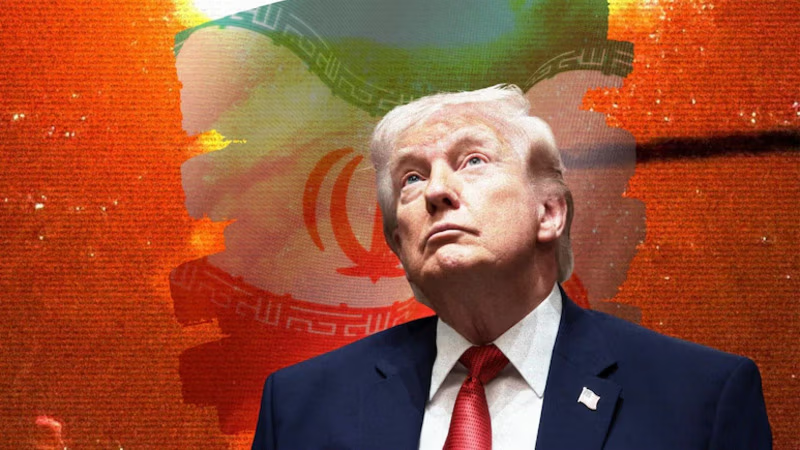
U.S. President Donald Trump has signaled that Washington could bring its military campaign against Iran to a close within weeks, offering the clearest indication yet of a potential exit even as hostilities continue across the region.
Speaking amid mounting global economic pressure and rising energy concerns, Trump said U.S. forces would not remain in Iran “too much longer,” suggesting that operations could conclude within a two to three-week timeframe. He added that the withdrawal would not be contingent on reaching a formal agreement with Tehran, underscoring a strategy focused on achieving military objectives before disengagement.
The conflict, which began in late February, has entered its second month and is expanding into a broader regional confrontation involving multiple actors and critical infrastructure. Despite continued airstrikes and retaliatory actions, recent statements from Washington point to a shift toward winding down the campaign.
Trump also indicated that key global supply routes, particularly the Strait of Hormuz, could stabilize following a U.S. withdrawal, suggesting that other nations dependent on the corridor would step in to maintain its security.
The remarks have had immediate implications for global markets. Expectations of a shorter conflict have contributed to easing oil prices and improved risk sentiment, with investors responding to the prospect of reduced geopolitical disruption.
However, uncertainty remains high. While the timeline signals intent, ongoing military activity and the absence of a formal diplomatic framework leave open the possibility of further escalation or delays in execution.
The evolving narrative reflects a broader balancing act for the U.S. administration, as it navigates military objectives, domestic pressure to end the conflict, and the economic consequences of prolonged instability.
For global markets and policymakers, the key question now is whether the proposed timeline reflects a definitive endgame or a conditional scenario dependent on developments on the ground.