

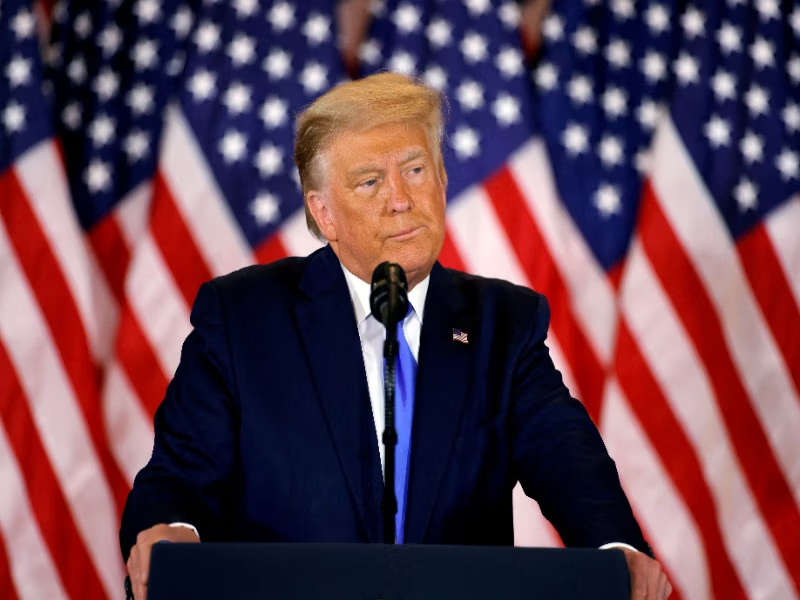
U.S. President Donald Trump has announced a temporary pause on attacks targeting Iran’s energy infrastructure, signalling a potential diplomatic opening even as the conflict continues across the Middle East.
Trump said the United States would halt strikes on Iranian energy facilities for 10 days, extending the deadline to April 6, and described ongoing discussions as “going very well,” suggesting progress toward a possible deal.
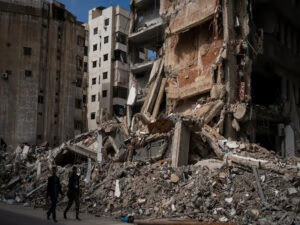
The decision marks a tactical shift in the conflict, which began in late February and has since escalated into a broader regional crisis, disrupting global energy supplies and pushing oil prices sharply higher.
Despite Trump’s optimism, Iranian officials have denied that formal negotiations are taking place, rejecting elements of a U.S.-proposed framework and maintaining that Washington’s claims are unilateral.
The pause applies specifically to energy infrastructure, a critical target given its central role in Iran’s economy and global oil markets. Analysts say the move is aimed at creating space for diplomacy while avoiding further disruption to already strained energy supply chains.
The war has already had significant global economic consequences, with disruptions through key routes such as the Strait of Hormuz contributing to volatility in oil prices, inflation concerns, and market instability.
Market reaction to the pause has been immediate. Oil prices, which had surged amid fears of prolonged supply disruptions, have eased amid expectations that tensions may not escalate further in the near term.
However, uncertainty remains high. Military activity continues across the region, and the absence of confirmed negotiations underscores the fragility of any potential de-escalation.
The development underscores a broader dual-track dynamic, where diplomatic signals coexist with ongoing conflict, leaving global markets highly sensitive to both political messaging and on-the-ground developments.