
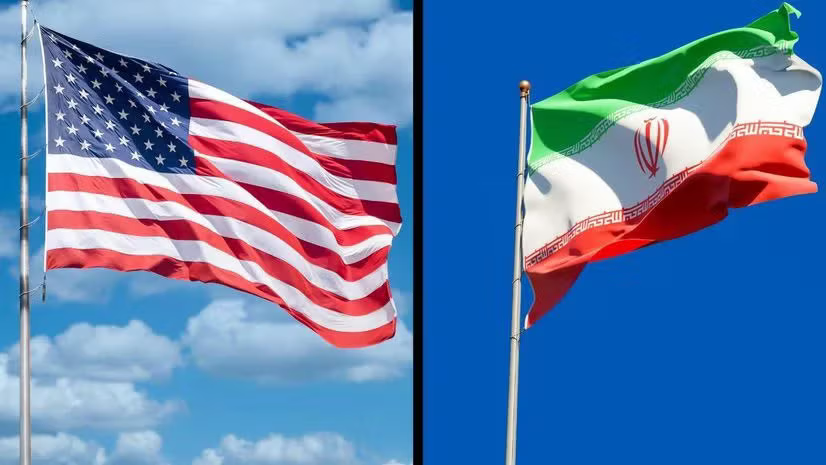
US-Iran talks’ ceasefire efforts suffered a setback after negotiations in Islamabad ended without an agreement, leaving the future of a temporary two-week truce uncertain and geopolitical risks elevated.
The discussions, which lasted more than 20 hours, marked the first direct engagement between Washington and Tehran in over a decade. Despite the high-level nature of the meeting, both sides failed to bridge differences on core issues, particularly around Iran’s nuclear program and broader regional demands.
U.S. Vice President JD Vance said the American delegation was returning without a deal, citing Iran’s unwillingness to accept key conditions. “The bad news is that we have not reached an agreement,” he said, adding that Washington had clearly outlined its red lines, including commitments from Iran not to pursue nuclear weapons capability.
Iranian officials, however, pointed to what they described as excessive demands from the U.S., suggesting that the gap between the two sides remains wide. Reports from Iranian state-linked media indicated that negotiations stalled over both nuclear restrictions and broader geopolitical conditions tied to the ongoing conflict.
The talks were held in Islamabad, where security was significantly heightened as Pakistan positioned itself as a mediator. The involvement of Islamabad reflects a notable diplomatic shift for the country, which has sought to reassert its role in regional negotiations.
Beyond nuclear concerns, the discussions were closely tied to developments in the Strait of Hormuz, a critical global energy corridor at the center of the conflict. While the issue was not formally addressed in public remarks following the talks, it remains a central point of leverage for Iran, which has linked broader concessions to shipping access and regional ceasefire conditions.
Iran has also pushed for the release of frozen assets, war reparations, and expanded ceasefire terms across the region, including in Lebanon. The U.S., for its part, has focused on ensuring free passage through Hormuz and limiting Iran’s nuclear capabilities, highlighting the fundamentally different priorities shaping the negotiations.
Despite the lack of agreement, there are indications that diplomatic engagement may continue at a technical level, with both sides expected to exchange documents to keep channels open.
The outcome underscores the fragile nature of the current ceasefire. While the pause in hostilities has provided temporary relief to global markets, particularly in energy, the absence of a formal agreement leaves the situation vulnerable to renewed escalation.
For now, the breakdown in talks reinforces the depth of mistrust between the two sides and suggests that any lasting resolution will require further negotiation, with significant gaps still to be addressed.