
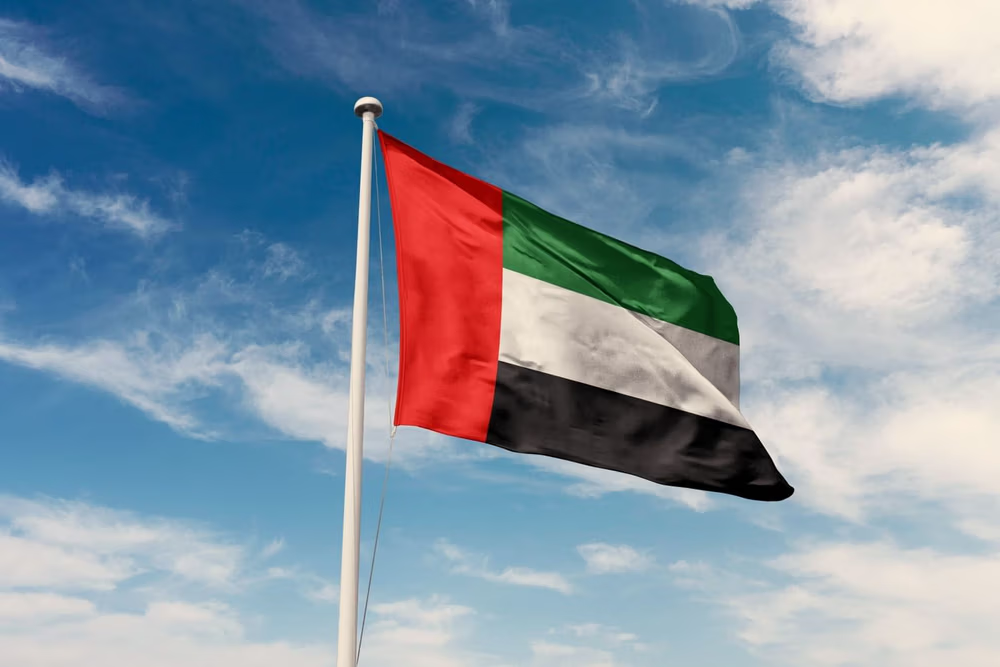
The UAE has, for the first time, entered the ranks of the world’s top 10 exporters, a milestone that reflects how far the country has come in reshaping its economic model.
Latest data from the World Trade Organization shows the UAE ranked ninth globally in goods exports in 2025, placing it firmly among the world’s leading trading nations.
The scale of that rise is striking. In just four years, the UAE’s total trade in goods and services has jumped from $949 billion in 2021 to $1.63 trillion in 2025. It’s a shift that points not just to growth, but to a deeper structural change in how the economy operates.
Goods trade remains the backbone, reaching $1.33 trillion, with exports accounting for more than half. But the more telling story is in services. Trade in services crossed the AED1 trillion mark for the first time, driven by steady expansion in sectors like logistics, finance, technology, and tourism.
That balance is beginning to matter. It suggests the UAE is no longer just moving goods, but also exporting capabilities.
The country’s trade surplus reflects that momentum. It rose to over AED584 billion in 2025, up 19 percent from a year earlier, as export growth outpaced imports.
Officials have framed the milestone as a validation of the UAE’s long-term strategy.
Dr. Thani Al Zeyoudi said the ranking reflects both competitiveness and international confidence in the UAE economy, adding that the country intends to build on the momentum despite ongoing geopolitical uncertainty.
A big part of that strategy has been opening markets. The UAE’s Comprehensive Economic Partnership Agreements have expanded exporters’ access while reducing trade barriers. At the same time, investment in ports, logistics, and digital infrastructure has strengthened its position as a global trade hub.
What also stands out is consistency. The UAE has held its position as the leading trading nation in the Middle East and Africa since 2014, suggesting this is not a one-off spike, but part of a sustained trajectory.
The global backdrop, however, is becoming more complicated.
The WTO expects trade growth to slow in 2026, with geopolitical tensions and higher energy prices weighing on global demand. Goods trade growth is projected to fall sharply, and services are also expected to moderate.
That makes the UAE’s current position more significant. It has reached this milestone at a time when global trade is becoming more fragmented and uncertain.
The question now is whether it can sustain the pace.
For now, the direction is clear. The UAE is not just participating in global trade; it is becoming one of its more influential players.
–Input WAM