

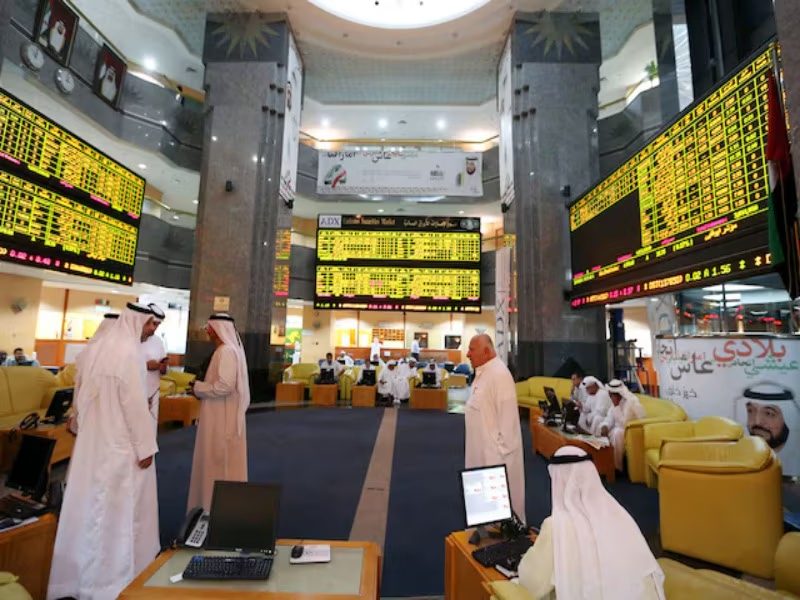
The stock markets in the United Arab Emirates slipped on Friday, yet ended the week up with a rebound of the oil prices, giving some support despite the lack of trades as the holidays approached the new year.
Oil prices, which are one of the driving forces of the Gulf equities, changed minimally on the day. Shareholders considered the possibility of supply risk due to an increase in geopolitical tensions following the United States’s conduct of airstrikes against Islamic State fighters in Nigeria and increasing economic pressure on the oil of Venezuela.
The index of Abu Dhabi was flat on the day, with consumer discretionary and energy stocks down, but gains were made in other sectors. Therefore, the market went up 0.7 percent on the week, ending a weekly streak of declined market.
Conglomerate Alpha Dhabi Holding dropped by 0.5 percent, and Abu Dhabi Commercial Bank fell by 1.5 percent, whereas Presight AI Holding rose by 1.2 percent. First Abu Dhabi Bank, the UAE’s largest lender, gained 0.5 percent.
Managing principal at Tickmill, Joseph Dahrieh, said that the “Market saw limited movement today. While the rebound in oil prices this week provided temporary support, the bearish 2026 surplus narrative remains a lingering risk that could weigh on investor sentiment in the coming months.”
Dubai’s benchmark index shed 0.1 percent, pressured by declines in financial and consumer discretionary shares, even as it logged its fifth consecutive weekly gain. Thus, Dubai Islamic Bank softened 0.8 percent, and low-cost carrier Air Arabia dropped by 1.7 percent.